How to Find Car Auction Photos by VIN (Copart & IAAI)
 Chris HansVehicle History ExpertAugust 31, 20268 min read
On this page
- At a glance
- What you need before you start
- How to find car auction photos by VIN: step by step
- Reading the photos like a claims adjuster
- Airbags and seat belts
- Structural clues
- Water lines
- The odometer shot
- Interior wear versus claimed mileage
- The limits of a free Copart photo search
- Find car auction photos by VIN after the lot has sold
- Troubleshooting
- The VIN returns no results on either site
- I found the lot but the gallery only has two blurry thumbnails
- The odometer photo is missing
- The site wants me to register or upgrade
- Two different lot records show the same VIN
- The photos look nothing like the car I'm being shown
- FAQ
- Is there a truly free Copart photo search?
- How do I do an IAAI VIN check with images?
- How long do auction listings stay online?
- Can I look up salvage car history with photos in one place?
- Do auction photos prove a car was totaled?
- Should a rebuilt car with bad auction photos be an automatic no?
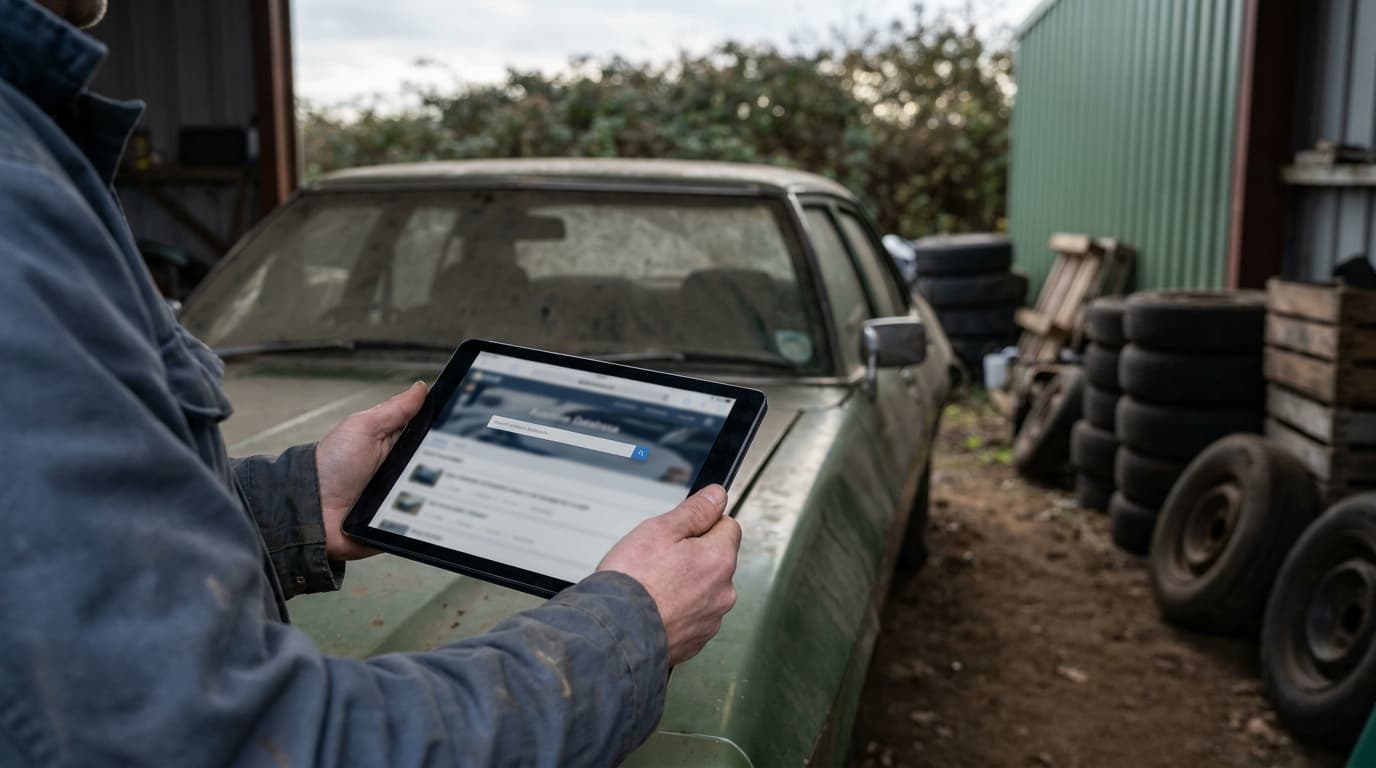
If you want to find car auction photos by VIN, start with the two biggest salvage auction sites: Copart.com and IAAI.com. Both let you paste a 17-digit VIN into their inventory search at no cost, and if the car is currently listed (or was listed very recently), you'll see the photo set the auction took when the vehicle arrived on the lot. The catch is that sold lots drop off public search fairly quickly, so for a car that went through auction in 2019 or 2022 you'll need an archive instead.
This guide walks through the free searches first, then what to do when they come up empty, and finally how to read the photos so you actually learn something from them. Auction photos are the closest thing a used-car shopper gets to seeing the damage before the body shop covered it up.
- At a glance
- What you need before you start
- How to find car auction photos by VIN: step by step
- Reading the photos like a claims adjuster
- The limits of a free Copart photo search
- Find car auction photos by VIN after the lot has sold
- Troubleshooting
- FAQ
At a glance
| Where you look | Search by VIN? | Photos of lots that already sold | Cost |
|---|---|---|---|
| Copart.com inventory search | Yes | Limited; current and recent lots only | Free to browse, account needed for some details |
| IAAI.com inventory search | Yes | Limited; current and recent lots only | Free to browse, account needed for some details |
| Web and image search (site: queries) | Sometimes | Hit or miss, depends on cached pages | Free |
| TrulyCar Complete Vehicle History Report | Yes | Yes, archived auction photos where they exist | $16.99 one time |
| NHTSA recall lookup | Yes | No photos, recalls only | Free |
What you need before you start
- The full 17-digit VIN. Not the last 8, not a partial from a listing screenshot. Auction search fields usually want the whole thing.
- A plate, if that's all you have. A US license plate will get you to the VIN in a minute or two. Our walkthrough on the free license plate lookup covers it.
- A desktop browser. Auction photo galleries are big files. On a phone you'll miss the detail that matters, like a wrinkled inner fender or a water line on the door card.
- Ten minutes. Doing this properly means clicking through 40 to 100 images, not skimming the first three.
How to find car auction photos by VIN: step by step
Labels on both auction sites change from time to time. If a button name below doesn't match what you see, look for the nearest equivalent.
Decode the VIN first. Paste it into the free VIN decoder on the TrulyCar homepage and confirm the year, make, model, engine and assembly plant. If the decoded car is a 2016 Honda Accord EX-L and the listing you're chasing says 2018 Accord Sport, stop right there. You have a typo or a bad listing, and no photo search will fix that.
Search Copart. Go to copart.com and paste the VIN into the search box at the top of the page ("Search Inventory"). Hit enter. A match takes you to the Lot Details page, which carries the photo gallery, the lot number, odometer reading, primary and secondary damage codes, and the title description for the selling state.
Search IAAI. Do the same at iaai.com using the site search, or open Advanced Search and use the dedicated VIN field. A hit lands you on the Vehicle Details page with its image gallery. Some lots include a 360-degree walkaround view, which is worth clicking through slowly.
Note the lot number and sale date. Write them down before you close the tab. Lot numbers are how you find the same car again on third-party mirrors, and the sale date tells you where the auction event fits in the car's timeline. A car sold at auction in March 2021 that shows a clean title in June 2021 deserves scrutiny.
Download the images. Right-click and save every photo, or at minimum the corners, the engine bay, the interior, the odometer shot, and the underside if there is one. Public auction listings disappear. Your saved folder doesn't.
Widen the search if the VIN comes up dry. Try the auction sites' year/make/model filters plus a state, then scan thumbnails for a color and trim match. In a normal web search, a query like
site:copart.comfollowed by the VIN sometimes surfaces a cached lot page. Aggregator sites that mirror auction inventory can also hold onto photos longer than the source listing.Cross-check the odometer. Find the dashboard photo, read the mileage, and compare it to what the seller is telling you now. A 2017 Ford Escape photographed at 118,400 miles in 2022 should not be advertised at 96,000 miles today. That gap is the single most common thing auction photos expose. Our 9-step odometer rollback check lays out how to build the rest of the case.
Match the photos to the title record. Damage in photos plus a branded title is a straightforward story. Heavy structural damage in photos plus a clean title from a different state is the pattern behind title washing, and it's the reason you check both.
Run the recall check. Free at nhtsa.gov/recalls. Salvage-and-rebuild cars often sit for months with open campaigns nobody bothered to close out.
Reading the photos like a claims adjuster
The photos are only useful if you know where the money hides. Here's what I look at, in order:
Airbags and seat belts
Deployed bags mean the crash was hard enough to trigger the sensors, and a proper repair means new modules, new bags, new belt pretensioners, plus a cleared crash record in the restraint control module. Shortcuts here are common and dangerous. Look for a shot of the dash with bags hanging or the covers torn open.
Structural clues
Radiator support pushed back, strut tower wrinkles, a door gap that's wide at the top and tight at the bottom, or a trunk floor with buckling. Bumper covers and fenders are cheap. Unibody straightening is not, and it's the difference between a $2,000 fix and a car you shouldn't buy.
Water lines
Flood cars show a horizontal stain on door panels, seat foam, and the lower dash. Check the spare tire well photo if there is one. Silt in the well is a giveaway. IAAI and Copart damage codes sometimes say water/flood outright, but not always.
The odometer shot
Most auction photo sets include a dash photo with the key on. That number is a dated data point from a party with no reason to lie about it, which makes it one of the more valuable images in the whole set.
Interior wear versus claimed mileage
A shiny steering wheel, worn pedal rubber, and a driver's seat bolster split at 74,000 claimed miles don't add up. Photos let you judge that without standing in a parking lot with a hopeful seller.
The limits of a free Copart photo search
A free Copart photo search does exactly one thing well: it shows you cars that are on the block now or were very recently. That's how the business works. Copart and IAAI run marketplaces for insurers and fleets, not public archives for used-car shoppers. Once a lot sells and the paperwork clears, the public listing has served its purpose.
Two other practical limits worth knowing:
- Both sites gate parts of the listing behind a free account, and bidding requires a registered buyer account (in many states, a license or a broker).
- Neither site is organized around a car's life story. You get one auction event, not the 2014 Georgia title, the 2019 New Jersey insurance loss, and the 2021 Texas retitle.
So the free search is step one, not the whole job. If a 2018 Nissan Rogue you're looking at was totaled in 2020 and rebuilt in 2021, the auction sites almost certainly won't show you a thing today.
Find car auction photos by VIN after the lot has sold
This is where an archive matters. When you need to find car auction photos by VIN for a sale that happened years ago, you're looking for a service that captured and kept those images. A TrulyCar Complete Vehicle History Report pulls title and brand records, damage events with the auction photo archives attached where they exist, and a full odometer chronology with rollback detection, so the photo and the paperwork sit side by side instead of in two browser tabs. One report is $16.99, a 3-pack is $29.99, and a 5-pack is $44.99. No subscription to cancel later, which matters if you're shopping three cars this month and none next month.
For context, single reports from the best-known national brands tend to land around the $45 mark, and some services run on a recurring monthly plan. CARFAX and AutoCheck both publish their own pricing, so check it yourself rather than taking anyone's word for it. What I'd flag: whichever route you take, make sure the report you buy includes an odometer history and title brand check, because the photos alone won't tell you what state the car was retitled in.
If the photos and the title brand together suggest a rebuild, read our guide on salvage and rebuilt title identification before you make an offer. Rebuilt cars can be fine buys at the right discount. They're rarely fine buys at clean-title money.
Troubleshooting
The VIN returns no results on either site
Three likely reasons: the car never went through a public salvage auction, the lot already sold and dropped off, or you have a character wrong. VINs have no letters I, O, or Q, so if you typed one of those, replace it with 1 or 0 and try again. Also confirm you're not searching a partial VIN with a leading space.
I found the lot but the gallery only has two blurry thumbnails
Photo count varies by yard and by year. Older listings tend to have fewer images. Zoom instead of squinting, and pull the damage codes and odometer field off the details page since those carry information the photos may not.
The odometer photo is missing
Common on cars that arrived without power or with a smashed cluster. In that case the auction's stated mileage field is usually noted as "not actual" or similar. Fall back on the title odometer entries in a history report and on physical wear evidence in the interior shots.
The site wants me to register or upgrade
A free account is enough to see most listing details on both auction sites. If you're being pushed toward a paid membership just to see photos of one car, that's a sign you're on a third-party mirror rather than the auction itself. Check the domain in the address bar.
Two different lot records show the same VIN
That happens, and it's useful. A car can go through auction twice: once after the original loss, again after a later claim or a failed rebuild. Compare mileage and damage between the two records. Rising damage with flat mileage is a red flag.
The photos look nothing like the car I'm being shown
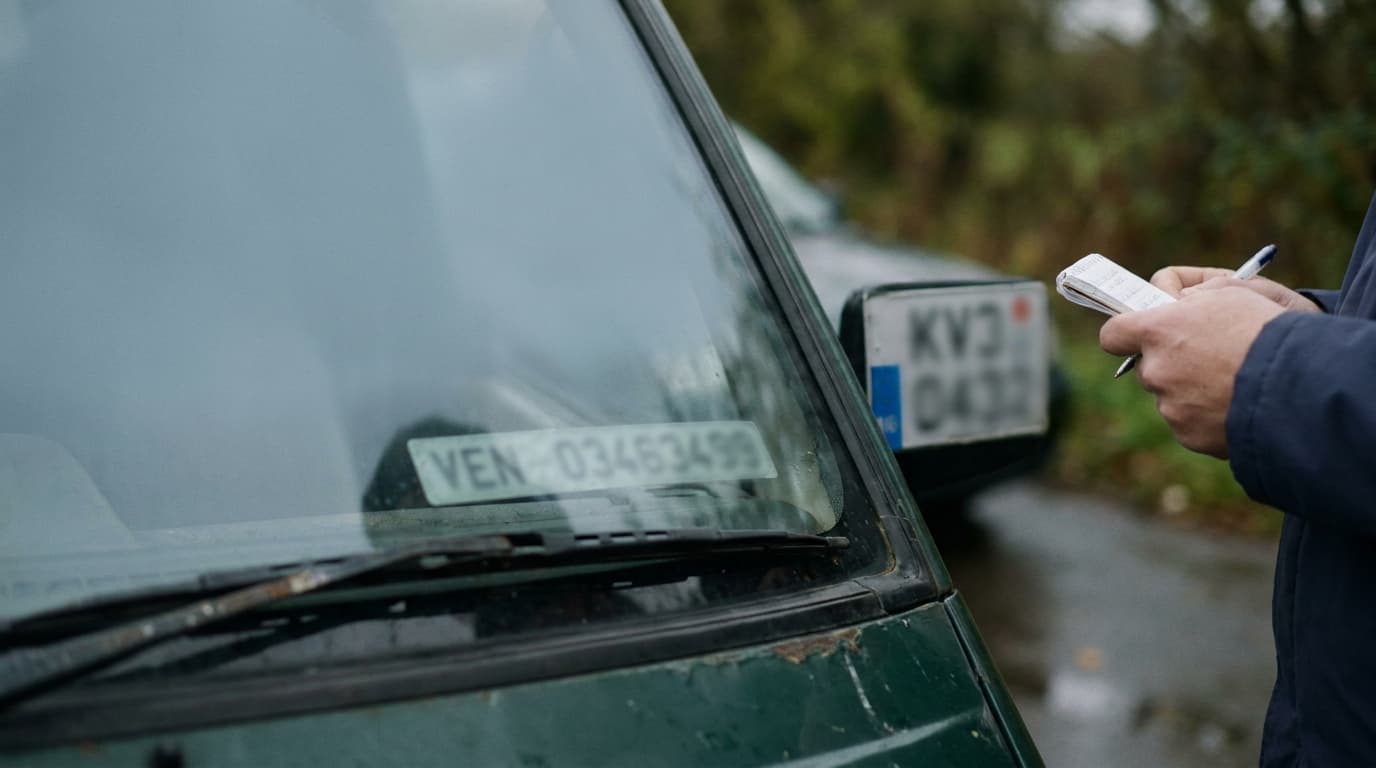
Confirm the VIN on the physical car (driver's door jamb sticker, dash plate at the base of the windshield, and the title document) all match. Mismatched plates or a swapped title are worth walking away from immediately.
FAQ
Is there a truly free Copart photo search?
Yes, for current and recent inventory. Copart's public inventory search accepts a VIN and shows the lot's photo gallery without payment, though a free account unlocks more listing detail. What you won't get free is a searchable archive of lots that sold years ago.
How do I do an IAAI VIN check with images?
Go to iaai.com, use the site search or the VIN field in Advanced Search, and open the Vehicle Details page for the matching lot. The image gallery, and sometimes a 360-degree view, sits at the top of that page. If nothing matches, the lot has likely closed out of public search.
How long do auction listings stay online?
Not long after the sale closes, and the exact window varies by auction and yard. Treat any lot page you find as temporary and save the images the day you find them.
Can I look up salvage car history with photos in one place?
That's the point of a history report with an auction photo archive attached. A TrulyCar report combines NMVTIS title and brand data, damage events with archived auction photos where available, odometer chronology, open recalls from NHTSA, the factory maintenance schedule, and market values by condition for $16.99.
Do auction photos prove a car was totaled?
They prove a vehicle was photographed with that damage at that yard on that date. Whether an insurer declared it a total loss shows up in the title record and insurance loss entries, not the photos. Use both together.
Should a rebuilt car with bad auction photos be an automatic no?
Not automatically, but the bar rises fast. Deployed airbags, frame damage, or flood exposure means you want the repair invoices, a pre-purchase inspection at an independent shop, and a price that reflects the branded title. If the seller can't produce documentation of the repair, pass.
Chris Hans
Vehicle History Expert
Chris Hans writes TrulyCar's practical guides for used-car buyers, built on the same NMVTIS title data and NHTSA records that power our reports.
Buying a used car? Check its history first.
Run a free VIN checkKeep reading
How to Find Car Auction Photos by VIN (Copart & IAAI)
Find car auction photos by VIN using Copart and IAAI search, archive sites, and history reports. Step-by-step, plus fixes when the lot is gone.
Sep 13, 20268 min read
Can You Find a License Plate Number From a VIN?
Usually not, and the reason is federal privacy law. Here is who can legitimately pull a plate from a VIN, what a VIN does reveal, and what to do for tolls, tickets, and hit-and-runs.
Sep 9, 20267 min read

Cheap VIN Check Traps: TrulyCar vs EpicVIN vs Bumper
A cheap VIN check can cost more than a $45 report if it auto-renews. Compare TrulyCar, EpicVIN and Bumper on price, data and cancellation.
Sep 3, 20267 min read