Accident History VIN Check
Bodywork hides crashes from your eyes. It cannot hide them from the record.
A good body shop can make a hard hit disappear. Panels get replaced, paint gets blended, and six months later the car photographs like it never happened. That is the entire problem with judging a used car by looking at it: the better the repair, the less there is to see.
The record works differently. Insurance claims, police reports, salvage listings, and repair estimates get filed against the VIN and stay there. An accident history check reads all of it back, including the photos taken when the damage was still visible.
What it does to a car
Structural weakening
Safety criticalA crash that bends rails or pillars changes how the car protects you in the next one. Repairs can restore appearance without restoring strength, and the difference only matters at the worst possible moment.
Airbag history
Deployed airbags are expensive to replace properly, and corner-cut rebuilds have been caught with empty housings or salvaged units. A deployment in the record means the restraint system deserves verification.
Alignment and wear that never ends
A car that was bent and imperfectly straightened eats tires, pulls under braking, and loosens over years. Owners sell these cars because living with them is exhausting.
Resale value that already dropped
A reported accident cuts a car's value whether or not the seller mentions it. If you do not know about the crash, you are the one absorbing that cut at full price.
How to spot it in person
The record tells you what was reported. Your eyes and nose cover the rest. Check these before any money moves:
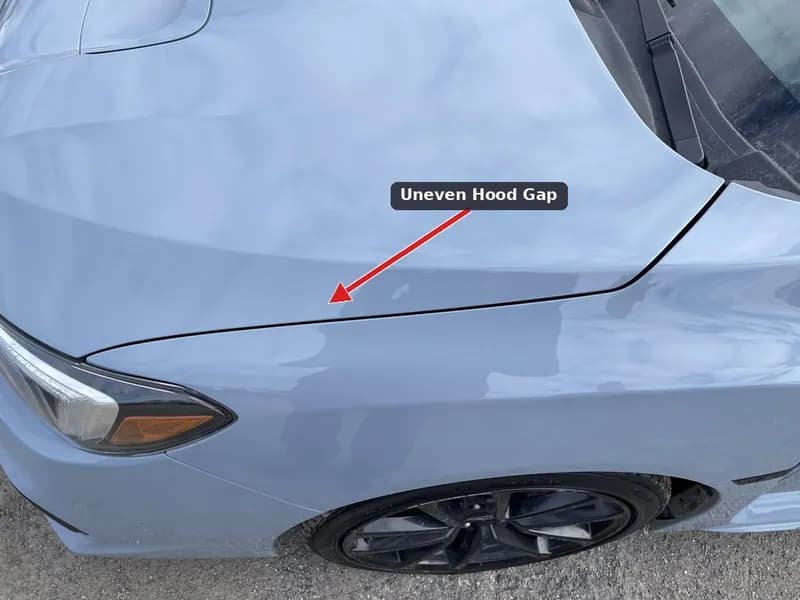
Panel gaps and alignment
Run your eye along the gaps between hood, fenders, and doors. Factory gaps are even; crash repairs rarely are. A hood that sits proud on one corner is telling you something.
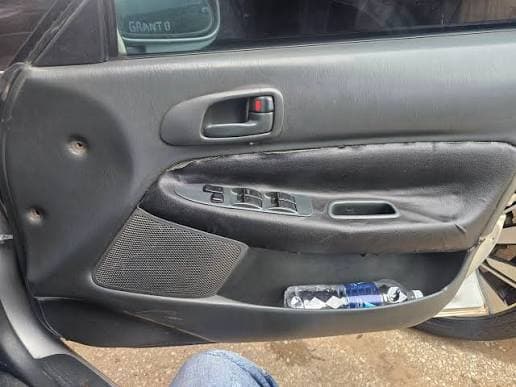
Paint texture and overspray
Repainted panels show orange-peel texture, color that shifts in sunlight, and overspray on rubber seals and trim. Check door edges and the underside of the hood, where blending is hardest.
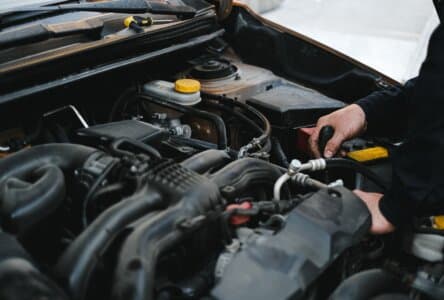
Bolt heads and welds
Open the hood and doors and look at the bolts. Factory bolts wear untouched paint; a wrench leaves witness marks. Fresh undercoating or irregular welds in the engine bay mean structural work.
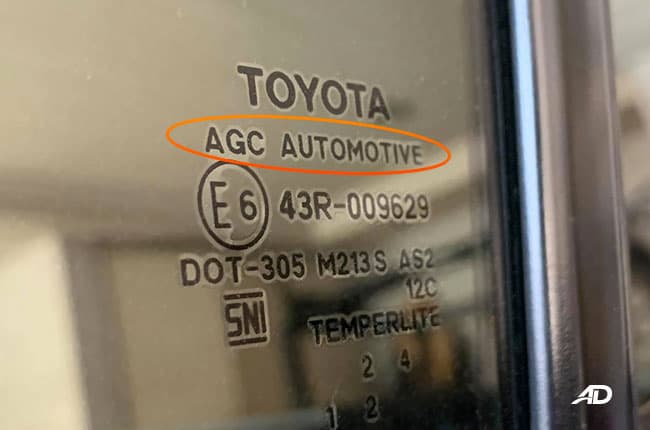
Windshield and glass stamps
Every piece of factory glass carries the same brand stamp. One mismatched door glass or a windshield from another maker points to a repair the seller may not have mentioned.
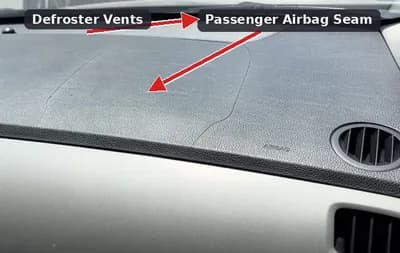
Interior deployment traces
Check the steering wheel and dash seams for replaced covers, and the headliner near the pillars for tension differences where curtain airbags fired. A deployed cabin is hard to restore invisibly.
How a crash disappears from a listing
The hit
The car gets wrecked. An insurance claim or salvage listing records the damage, sometimes with photos.
The rebuild
A rebuilder buys it cheap, repairs to cosmetic standard, and details the evidence away.
The silence
The listing says nothing. Accident disclosure depends on the seller knowing, and choosing to say.
The sale
The car sells at clean-history price. The discount the buyer deserved stays in the seller's pocket.
What the report shows
- Reported accidents with impact areas and damage severity where recorded
- Repair estimates attached to reported damage events
- Salvage and rebuilt title brands from every state, in one chronology
- Auction listings with photos, showing the car before the repair
- The odometer trail around each event, so you can see the car's life before and after
Accident History FAQ
Do all accidents show up on a VIN check?
Is a car with a reported accident always a bad buy?
What do the accident photos in the report actually show?
Can I check accident history for free?
Other targeted checks
Run a accident history check before you buy
The decode is free and takes seconds. The full report is one payment, no subscription.
Run a free VIN check