VIN Cloning: How to Tell If a Car Is Cloned Before You Buy
 Chris HansVehicle History ExpertOctober 3, 202610 min read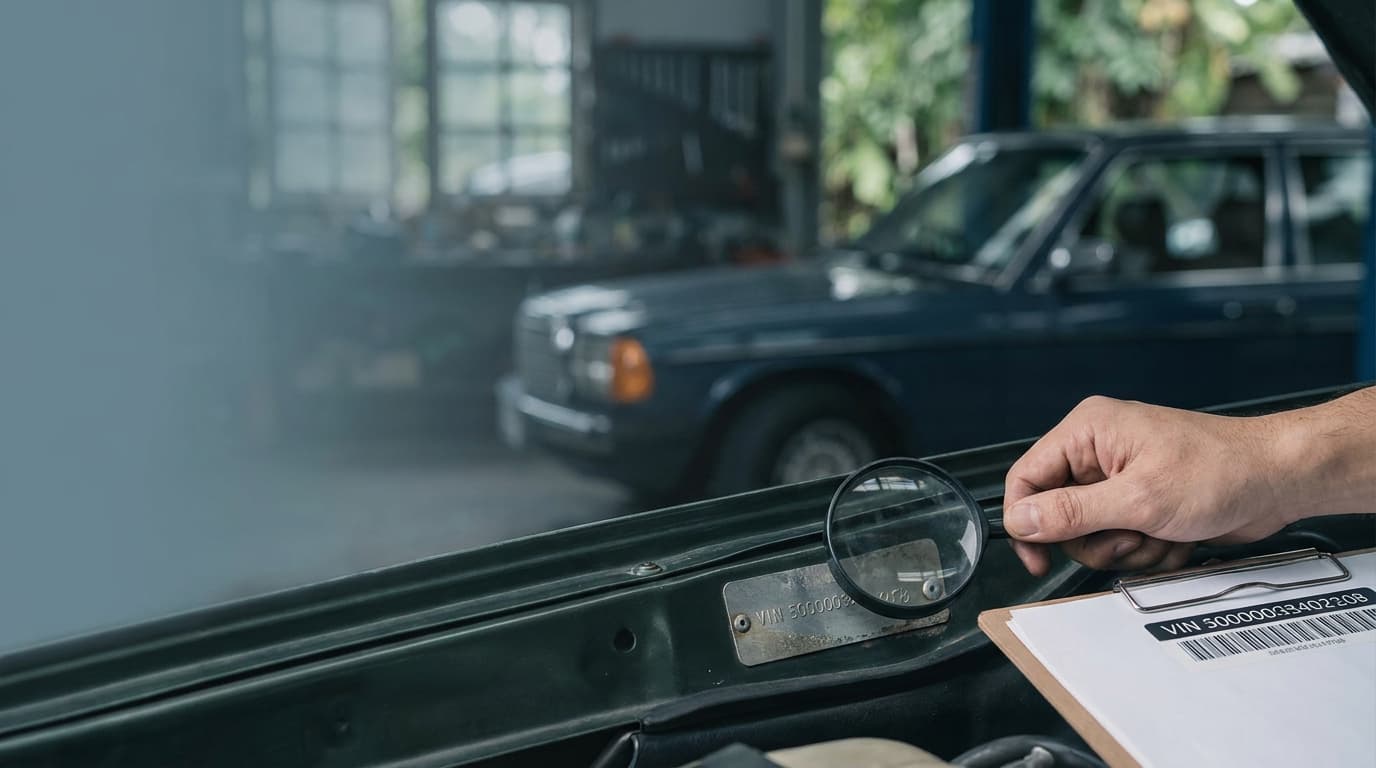
On this page
- At a glance
- How VIN cloning works
- Why a stolen-car check misses it
- How to tell if a car is cloned, in person
- Match every VIN on the car
- Look closely at the dash VIN plate
- Check the door label
- Test the keys and locks
- Look at the car, not just the listing
- Check the paperwork and the seller
- What the history shows
- If you think a car is cloned
- If your own VIN was cloned
- FAQ
- What is VIN cloning?
- Will a free stolen-car check catch a cloned VIN?
- What are the signs of a cloned car?
- What happens if I buy a cloned car?
- Can someone clone my car's VIN?
VIN cloning is car theft with a disguise. A thief steals a car, then gives it the vehicle identification number (VIN) of a legally registered car of the same make, model, and year. The stolen car gets a new VIN plate, a new door label, and paperwork to match, and it goes up for sale as if it were the clean car.
It works because the VIN it wears really is clean. Run that number through a free stolen-car check and nothing comes up, because the car that VIN belongs to was never stolen. This guide explains how cloning works, why database checks miss it, and the checks that do catch it, most of which you can do in the seller's driveway.
In this guide
- At a glance
- How VIN cloning works
- Why a stolen-car check misses it
- How to tell if a car is cloned, in person
- Check the paperwork and the seller
- What the history shows
- If you think a car is cloned
- If your own VIN was cloned
- FAQ
At a glance
| Question | Answer |
|---|---|
| What is a cloned car? | A stolen car wearing the VIN of a legally registered car of the same model. |
| Does a free stolen check catch it? | Usually not. The cloned VIN belongs to a car that was never stolen. |
| What catches it? | Every VIN on the car matching the title, an untouched VIN plate, and a history that fits one car. |
| Biggest warning signs | Mismatched or tampered VINs, one key, a low price, cash only, and a seller whose ID does not match the title. |
| What happens to the buyer? | The car is seized and returned to its real owner or insurer. The buyer usually loses the money. |
How VIN cloning works
Every car sold in the US since 1981 has a 17-character VIN, and it is not a secret. It sits on a plate at the base of the windshield, readable from the sidewalk. It appears in online listings, on service invoices, and on insurance cards. That openness is useful for buyers, and it is also what makes cloning possible.
A cloning operation usually runs in four steps:
- The theft. A car is stolen and reported. Its real VIN is now flagged in law-enforcement and insurance theft records.
- The donor VIN. The thieves copy the VIN of a legally registered car with the same make, model, year, and often color. They may read it through a windshield in a parking lot or take it from a listing.
- The new identity. They make a VIN plate and a door label with the donor's number and attach them to the stolen car. Paperwork follows: a forged title, a counterfeit registration, or a real title obtained by fraud, sometimes in another state where the paper trail is harder to follow.
- The sale. The car is listed at an attractive price, usually for cash, often with a story about why the seller needs it gone quickly.
The buyer drives away with a car whose VIN, plate, and title all agree. The problem appears later: at a registration counter, at a traffic stop, or when a plate reader flags the car. A stolen car goes back to its legal owner or that owner's insurer, whatever the buyer paid and however honestly they bought it.
Why a stolen-car check misses it
A free stolen-car check, such as the National Insurance Crime Bureau's VINCheck, answers one question: has this VIN been reported stolen by a participating insurer? It is worth running every time. But for a cloned car, the answer is no. The VIN you type in belongs to the donor car, which is sitting in its owner's driveway.
The same applies to a free decode. A cloned VIN decodes to the right year, make, and model, because the thieves picked a donor that matches. So two free checks pass, and that is exactly what the seller is counting on.
What a clone cannot easily fake is everything around the number: the factory hardware that holds the VIN on the car, the other places the VIN or matching numbers appear, the keys, the seller's identity, and the history of a VIN that is now attached to two cars.
How to tell if a car is cloned, in person
These checks take about ten minutes and need only your phone's flashlight. Do them before any money changes hands.
Match every VIN on the car
Find the VIN in at least three places and compare them with each other and with the title, character by character:
- The dash plate at the base of the windshield on the driver's side.
- The door label on the driver's door jamb, the sticker with the manufacture date and tire pressures.
- Under the hood or on the frame, where many cars carry a stamped VIN or a VIN label. Many models also carry VIN labels on major body parts.
One mismatch ends the deal. A seller's explanation for why the numbers differ does not change what the numbers say.
Look closely at the dash VIN plate
Factory plates are held by uniform rivets and sit flat and undisturbed. Look for scratches around the plate, glue, rivets that look different from each other, a plate that sits higher than the dash, or characters with a different font or spacing from the door label.
Check the door label
The label should be intact, factory-printed, and match the dash VIN. A missing label, a label that looks reprinted, or one that has been cut, peeled, or covered is a reason to stop. Body shops sometimes replace doors, but a legitimate replacement comes with an explanation and repair paperwork.
Test the keys and locks
Ask for every key. Try each key in each lock and in the ignition, or confirm a push-button car starts with each fob. Thieves often sell a car with one key, a key that only works the ignition, or an aftermarket fob. Look at the steering column and the door locks for drill marks, pry marks, or new parts that do not match the rest of the interior.
Look at the car, not just the listing
Compare the car's options, trim, and color with what the VIN decodes to. A cloned VIN describes the donor car. If the decode says cloth seats and a smaller engine but the car has leather and the larger engine, you may be looking at two different cars sharing one number.
Check the paperwork and the seller
- Match the seller to the title. Ask for a photo ID and compare the name and address to the title. "I'm selling it for my cousin" is a reason to walk away.
- Examine the title itself. Real titles carry security features such as watermarks, special paper, and printed patterns that vary by state. Look for misspellings, uneven printing, or a title that looks freshly printed for an older car.
- Watch for a fresh out-of-state title. A car titled in another state only weeks ago is not proof of anything, but it is one of the ways cloned and washed cars build distance from their history. It is a reason to read the history carefully.
- Notice the pressure. A price well below market, cash only, a meeting in a parking lot instead of the seller's home, and a reason the sale has to happen today are the pattern. Any one of them can be innocent. Together they are how stolen cars get sold.
Some states require a VIN inspection, by a police officer, a DMV inspector, or a licensed verifier, before a car from another state can be titled. If the car you are buying will need one, or if you simply want certainty, an inspector can check identifying marks that buyers are not shown. Ask your state motor vehicle agency how to arrange it.
What the history shows
A cloned VIN now describes two cars: the real one and the stolen one. When both are being registered, insured, and serviced, the VIN's history often starts to contradict itself. That is why the history is worth reading even when the free checks are clean. Look for:
- Overlapping registrations. The same VIN registered or titled in two states during the same period.
- Odometer readings that go backward. Two cars reporting mileage under one VIN produce readings that rise, drop, and rise again. Our guide to odometer rollback shows how to read a mileage trail.
- Gaps and jumps in the title trail. A title that appears in a new state with no record of the car leaving the old one.
- A mismatch with the car in front of you. A history describing a different color, trim, or engine than the car you are looking at.
- Theft records. A reported theft, or a theft-and-recovery entry, tied to the VIN.
A TrulyCar report puts these in one place: theft records, the title chronology with every state and date, registration events, and odometer readings in order. You can decode the VIN for free first to confirm it matches the car, then unlock the full report for a one-time payment. Our stolen vehicle check covers the free steps in order.
A history report is one layer, not a guarantee. A clone that was made recently may not have produced any conflicting records yet. That is why the in-person VIN match comes first: it is the check a fresh clone cannot pass.
If you think a car is cloned
- Do not confront the seller. End the meeting politely and leave.
- Keep what you have. Save the listing, photos of the VIN plate and door label, the seller's phone number, and any messages.
- Report it. Give the details to your local police non-emergency line. You can also report vehicle fraud to the NICB.
If you have already bought the car, contact the police and your insurer right away, and tell your state motor vehicle agency. Bring the bill of sale, the title you were given, proof of payment, and every message with the seller. You are unlikely to keep the car, but a quick report gives you the best chance of tracing the seller and the money.
If your own VIN was cloned
Owners usually find out by mail: a parking ticket from a city they have not visited, a toll bill for a road they have not driven, or a registration notice for a car they already own. Report it to the police, send the agency that billed you a copy of the report, and contact your state motor vehicle agency so the record shows the conflict. Keep anything that shows where your car actually was on those dates.
Cloning sits next to another title scam that relies on crossing state lines: title washing, where a branded car gets a clean title in a new state. The defense for both is the same. Check the car against its paperwork, then check the paperwork against its history.
FAQ
What is VIN cloning?
VIN cloning is when a thief copies the VIN of a legally registered car onto a stolen car of the same make, model, and year. The stolen car gets a fake VIN plate, a fake door label, and often forged or fraudulently obtained paperwork, so it can be registered and sold as if it were the clean car.
Will a free stolen-car check catch a cloned VIN?
Usually not. A free check such as the NICB's VINCheck looks up theft records for the VIN you enter, and a cloned VIN belongs to a real car that was never stolen, so it comes back clean. The checks that catch a clone are physical: every VIN on the car matching the title, an untouched VIN plate, and a title and registration history that makes sense for one car.
What are the signs of a cloned car?
VINs on the dash, door label, and under the hood that do not match each other or the title; scratches, glue, or non-factory rivets around the dash VIN plate; a missing or replaced door label; one key or a key that does not fit every lock; a price well below market; a seller who cannot show ID matching the title; and a history that shows the same VIN registered in two places at once or mileage readings that jump backward.
What happens if I buy a cloned car?
When the clone is discovered, usually at a registration office, a police stop, or a plate scan, the car is seized and returned to its real owner or that owner's insurer. The buyer loses the car, and the money goes with a seller who is usually hard to find. Report it to the police right away and tell your insurer and your state motor vehicle agency.
Can someone clone my car's VIN?
Yes. The VIN is visible through the windshield and appears in listings and service paperwork, so anyone can copy it. Signs that your VIN is being used on another car include tickets, toll bills, or registration notices for places you have not been. Report them to the police and your state motor vehicle agency, and keep the paperwork showing where your car actually was.
Frequently asked questions
What is VIN cloning?
Will a free stolen-car check catch a cloned VIN?
What are the signs of a cloned car?
What happens if I buy a cloned car?
Can someone clone my car's VIN?
Chris Hans
Vehicle History Expert
Chris Hans writes TrulyCar's practical guides for used-car buyers, built on the same NMVTIS title data and NHTSA records that power our reports.
Buying a used car? Check its history first.
Run a free VIN checkKeep reading

Carfax vs AutoCheck vs TrulyCar: Which Wins?
Carfax vs AutoCheck vs TrulyCar: how the three reports compare on price, title brands, damage photos, and odometer data before you buy a used car.
Sep 18, 20267 min read
How to Use the NHTSA VIN Decoder (And What It Hides)
The NHTSA VIN decoder is free and precise on factory specs, but it skips titles, odometers, and damage. Here's how to run it and fill the gaps.
Sep 18, 20269 min read
How to Find Car Auction Photos by VIN (Copart & IAAI)
Find car auction photos by VIN using Copart and IAAI search, archive sites, and history reports. Step-by-step, plus fixes when the lot is gone.
Sep 13, 20268 min read