License Plate to VIN: How to Find a Car's VIN From Its Plate
 Chris HansVehicle History ExpertAugust 27, 202611 min read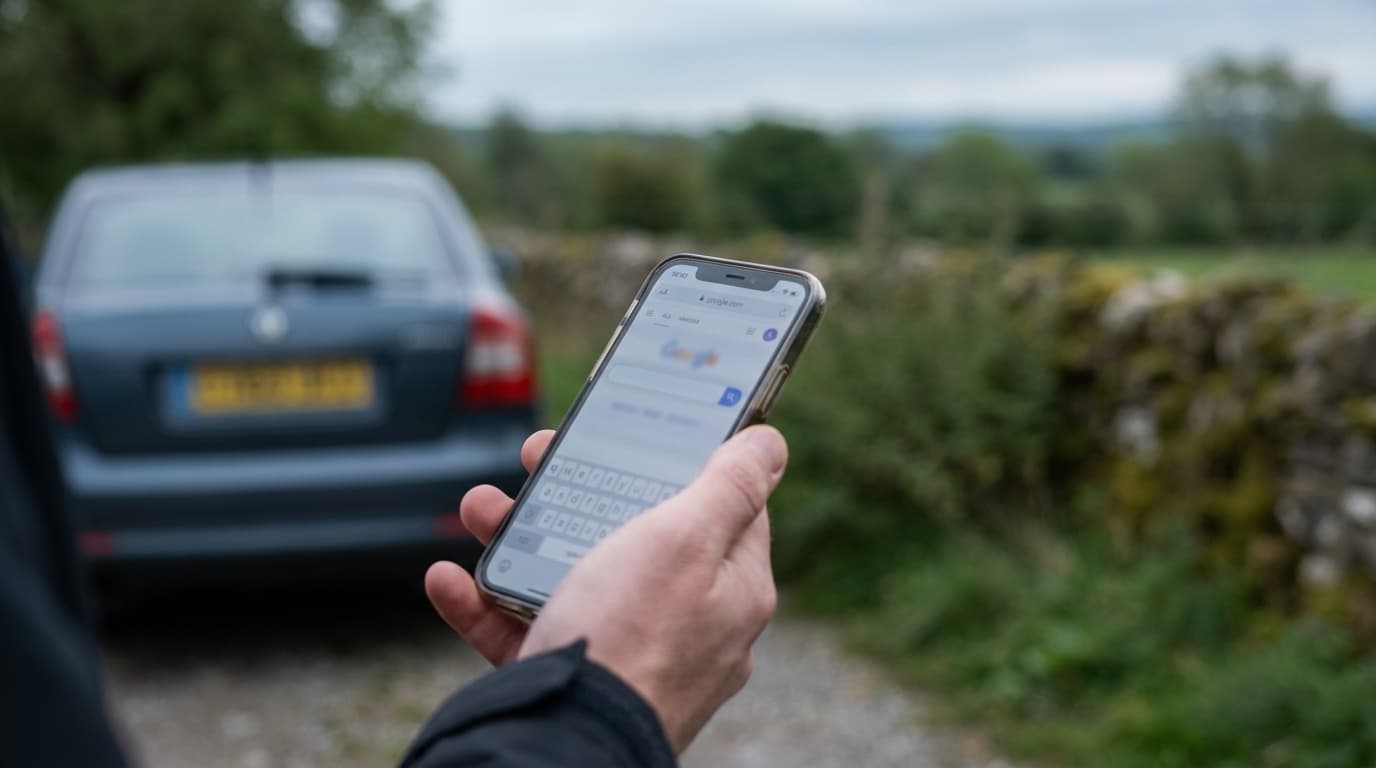
On this page
- Plate to VIN in three steps
- A worked example
- Where plate lookups are limited
- How a free license plate lookup works
- At a glance
- What you need before you start
- Step by step: free license plate lookup to VIN
- How long the whole process takes
- Lookup vehicle history by plate: state notes
- Troubleshooting a failed search
- "No results found" on a plate you know is valid
- The decode shows a different vehicle than the listing
- Vanity and specialty plates return nothing
- The VIN on the car doesn't match the paperwork
- The report came back thin
- What a plate can't tell you
- FAQ
- Can I find out who owns a car from the license plate?
- Is the free license plate lookup really free?
- Why does my plate search return a different car?
- Do all 50 states work?
- How accurate is the VIN decode?
- I'm looking at four cars this month. What's the cheapest way to check them all?
A free license plate lookup takes two pieces of information you can read off the back of a car (the plate characters and the issuing state) and returns the 17-character VIN along with the factory build details tied to it. You can do it from TrulyCar's homepage in well under a minute, no account required. What it will not give you is the owner's name or address, because federal law keeps that data locked down.
This guide walks through the exact steps, the fields you'll see on screen, what to do when the search comes back empty, and where a plate search stops being useful and a full history report takes over.
- Plate to VIN in three steps
- How a free license plate lookup works
- At a glance
- What you need before you start
- Step by step: free license plate lookup to VIN
- Lookup vehicle history by plate: state notes
- Troubleshooting a failed search
- What a plate can't tell you
- FAQ
Plate to VIN in three steps
If you only want the VIN, the license plate lookup does it in under a minute and costs nothing. Everything below this section is the long version, with the troubleshooting.
- Read the plate and its state. The state is the one printed on the plate, not where the car is parked.
- Enter both in the plate lookup. Type the characters with no spaces or dashes and pick the state from the list.
- Copy the VIN from the result. The decode underneath it shows the year, make, model, trim, and engine, so you can check the listing against the factory record before you spend anything.
A worked example
Suppose a Facebook Marketplace photo shows a Texas plate reading ABC 1234 (a made-up plate used only to show the format) on a car listed as a 2018 Honda Accord EX-L. You enter ABC1234, choose Texas, and search. The result is a 17-character VIN starting with 1HGCV, which decodes to a 2018 Accord built in Ohio with the 1.5-liter engine. The listing said EX-L; the decode says EX. That is worth a question before you drive over, and it took thirty seconds.
Where plate lookups are limited
- Temporary and paper tags have no permanent registration record to match. Ask the seller for the VIN.
- Dealer plates belong to the dealership, not to any one car.
- Government, fleet, and military plates are often withheld from public matching.
- Recently transferred plates can point at the seller's previous car for a few weeks after a sale.
The state-by-state notes further down cover each of these, and the troubleshooting section covers the "no results" and "wrong car" cases.
How a free license plate lookup works
Every registered vehicle in the US has a plate number that's unique within its state. That plate is tied in registration records to one VIN. A plate lookup tool matches the plate and state you type in against those records, pulls the VIN, then decodes the VIN against manufacturer and NHTSA specification data to show you the model year, make, model, body style, engine, and assembly plant.
Two limits matter. First, plates move. When a car is sold in a plate-transfer state, the seller often keeps the plate and screws it onto their next car, so the record can lag by weeks. Second, the Driver's Privacy Protection Act (18 U.S.C. 2721) restricts release of personal information from motor vehicle records. Any service that hands you a stranger's name and home address from a plate is operating outside that law. A legitimate lookup gives you the car, not the person.
So the honest framing for how to find VIN from license plate is this: the plate is a doorway to the vehicle's identity. Once you're through it, the VIN is what actually carries the history.
At a glance
| Question | Answer |
|---|---|
| Is the plate-to-VIN decode free? | Yes, on the TrulyCar homepage. No signup. |
| What you get free | 17-digit VIN, year, make, model, trim, engine, drivetrain, assembly plant, factory specs |
| What you never get | Owner name, address, phone number (restricted under the DPPA) |
| Coverage | All 50 states plus DC; match rates vary by state and by how recently the plate changed hands |
| Time | Roughly 30 to 60 seconds |
| Full history report | $16.99 for one, $29.99 for three, $44.99 for five. One-time payment, no subscription. |
| Inside the report | NMVTIS title and brand checks, damage events with auction photo archives, odometer chronology with rollback detection, sales and usage timeline, open recalls, factory maintenance schedule, warranty terms, market values by condition |
What you need before you start
- The plate characters. Write them down or photograph the plate. Zoom in if you're shooting from across a parking lot; an 8 read as a B will kill the search.
- The issuing state. This is the state name on the plate itself, not where the car is parked. A Georgia plate on a car sitting in Tennessee is still a Georgia lookup.
- A phone or laptop. The tool works the same on both.
That's it. You don't need the seller's permission to decode a plate you can see in public, and you don't need to be at the car. Plenty of buyers run the plate off a Facebook Marketplace photo before they bother texting the seller.
Step by step: free license plate lookup to VIN
Photograph or transcribe the plate. Get the full string plus the state name. Skip the decorative dashes and the county sticker. If the plate is a specialty or vanity design, note the state text carefully, since some designs shrink it to a small banner along the bottom edge.
Open trulycar.com. The search box sits at the top of the homepage. You'll see two tabs above the input field: VIN and License Plate.
Click the License Plate tab. The field label changes to Enter plate number and a state selector appears next to it.
Type the plate with no spaces or hyphens. Enter
7ABC123, not7 ABC 123. Letter case doesn't matter. If the plate has a stacked character or a symbol like a heart or a state outline, skip the symbol and enter the alphanumeric characters only.Pick the state from the dropdown. This is the field people get wrong most often. The dropdown is alphabetical by state name, so Missouri and Mississippi sit next to each other. Double-check before you submit.
Press Search. Results usually land in a few seconds. You'll get the decoded VIN at the top, then the build data underneath.
Read the decode and sanity-check it against the car. If the listing says 2016 Honda Accord EX-L V6 and the decode returns a 2016 Accord Sport with the 2.4-liter four, one of those is wrong. Trim and engine mismatches are where a lot of overstated listings fall apart, and it costs you nothing to catch it here.
Copy the VIN and verify it physically when you see the car. The VIN plate sits at the base of the windshield on the driver's side and on a sticker inside the driver's door jamb. Both should match the number you pulled. Mismatched or tampered VIN plates are a walk-away signal, not a negotiating point.
Run the history report if the car is a real candidate. The free decode tells you what the factory built. It doesn't tell you what happened over the next 100,000 miles. A vehicle history report from TrulyCar pulls the title brands, reported damage with auction photos where they exist, the odometer chronology, and open recall campaigns for that specific VIN, for $16.99.
Save the report or send it to whoever is helping you decide. If you're shopping three or four cars in the same weekend, the 3-pack at $29.99 works out cheaper than two singles.
How long the whole process takes
Plate to VIN: under a minute. Reading the decode carefully: two or three minutes. A full report top to bottom, including the odometer timeline and the damage section: fifteen to twenty minutes if you're actually reading rather than skimming. That's a fair trade against a $14,000 purchase.
Lookup vehicle history by plate: state notes
People search lookup vehicle history by plate [state] because they assume the process differs from one DMV to the next. The search itself doesn't change. What changes is how clean the underlying registration record is.
- Plate-transfer states (California, Texas, Florida, Pennsylvania and many others) let a seller keep the plate. When the plate migrates to a new car, the old link goes stale until the record updates. If your decode returns a completely different vehicle than the one in the listing, this is usually why.
- Plate-stays-with-the-car states are less common but produce steadier matches, since the plate follows the VIN through the sale.
- Temporary and paper tags generally return nothing. A car with a 30-day paper tag from a dealer has no permanent plate record to match yet. Ask the seller for the VIN directly.
- Dealer plates are registered to the dealership, not to any single car, so they decode to nothing useful.
- Government, fleet, and military plates are often held back from public matching.
Once you have the VIN, state lines stop mattering much. Title and brand data flows into NMVTIS, the federal system run by the Department of Justice, which is where a salvage brand issued in Louisiana shows up even after the car gets retitled in Ohio. That cross-state visibility is the whole reason title washing is harder to pull off than it was twenty years ago, though it still happens.
Troubleshooting a failed search
"No results found" on a plate you know is valid
Retype it. Most failures are transcription errors: 0 versus O, 1 versus I, 5 versus S, 8 versus B. Then confirm the state. Then consider that the plate may have been reassigned or surrendered. If the car is sitting in front of you, skip the plate entirely and read the VIN off the windshield.
The decode shows a different vehicle than the listing
Three likely causes: you mistyped a character, the plate was transferred off the car, or the seller swapped plates from another vehicle to make the car look registered. The third one is rare but worth taking seriously. Ask for the VIN, decode that, and see if the two stories line up.
Vanity and specialty plates return nothing
Vanity plates work fine in most cases. The problem is usually the state field, because specialty designs (university plates, veterans plates, wildlife plates) sometimes print the state name in a small strip that's easy to misread in a photo. Look for other clues in the image, like a dealer frame or a county sticker.
The VIN on the car doesn't match the paperwork
Stop. Don't hand over a deposit. A windshield VIN that disagrees with the door jamb sticker, the title, or your decode points to a rebuilt car, a cloned VIN, or worse. Report it if you think something's genuinely wrong, and find another car.
The report came back thin
Some vehicles simply have short paper trails. A 2021 Toyota RAV4 that's had one owner, no accidents, and no auction appearances will produce a short report. Nothing in the file isn't a red flag by itself. Missing years in an odometer chronology on a 2009 truck, though, deserves a question or two.
What a plate can't tell you
The free decode is factory data. It's accurate and it's genuinely useful for catching trim inflation and engine mismatches, but it's a snapshot of the car on the day it left the plant. Everything that determines what the car is worth today lives in the records that came after.
- Whether a title was branded salvage, flood, or total insurance loss
- Whether the car went through a salvage auction, and what it looked like when the photos were taken
- Whether odometer readings run in a straight line or jump backward between reports
- How many owners it had and whether it spent time as a rental or fleet unit
- Which recall campaigns are still open against that VIN
That's the split: the plate identifies the car, the report tells you what happened to it. Two of the largest names in this business, CARFAX and AutoCheck, also sell VIN-based reports, and single reports from the big brands typically land somewhere near the $45 mark at list price. TrulyCar's report is $16.99 flat with no recurring charge. If you want the point-by-point version, we wrote one: TrulyCar vs CARFAX.
One more free resource worth bookmarking: NHTSA's recall lookup takes a VIN and returns open safety recalls straight from the manufacturers. It won't show title brands or damage, but it's a fast second check before you drive off in something new to you.
FAQ
Can I find out who owns a car from the license plate?
No, and you should be wary of any site that says it can. The Driver's Privacy Protection Act restricts release of personal information from state motor vehicle records to a defined list of permissible uses, and a private citizen's curiosity isn't on it. A plate lookup returns vehicle data only.
Is the free license plate lookup really free?
Yes. Plate lookup and VIN decoding on the TrulyCar homepage cost nothing and don't require an account. The paid product is the full history report at $16.99, and you only buy it if you want the title, damage, odometer, and recall records for a specific VIN.
Why does my plate search return a different car?
Usually a plate transfer. In most states a seller can pull the plate off the car they sold and move it to their next vehicle, which leaves the old association stale for a while. Get the VIN from the seller and decode that instead.
Do all 50 states work?
All 50 states and DC are supported. Match quality varies. Newer registrations, temp tags, dealer plates, and government plates are the common gaps.
How accurate is the VIN decode?
The build data comes from manufacturer specifications and NHTSA's VIN decoding standards, so year, make, model, body style, engine, and plant are dependable. Trim naming occasionally differs from how a dealer markets the car, since manufacturers and sellers don't always use identical labels.
I'm looking at four cars this month. What's the cheapest way to check them all?
Decode every plate for free to weed out mismatches first. Then buy the 5-pack at $44.99, which covers five VINs and averages under $9 each. The reports don't expire on a clock the way a subscription window does, so there's no rush to burn them.
Chris Hans
Vehicle History Expert
Chris Hans writes TrulyCar's practical guides for used-car buyers, built on the same NMVTIS title data and NHTSA records that power our reports.
Buying a used car? Check its history first.
Run a free VIN checkKeep reading
How to Find Car Auction Photos by VIN (Copart & IAAI)
Find car auction photos by VIN using Copart and IAAI search, archive sites, and history reports. Step-by-step, plus fixes when the lot is gone.
Sep 13, 20268 min read
Can You Find a License Plate Number From a VIN?
Usually not, and the reason is federal privacy law. Here is who can legitimately pull a plate from a VIN, what a VIN does reveal, and what to do for tolls, tickets, and hit-and-runs.
Sep 9, 20267 min read

Cheap VIN Check Traps: TrulyCar vs EpicVIN vs Bumper
A cheap VIN check can cost more than a $45 report if it auto-renews. Compare TrulyCar, EpicVIN and Bumper on price, data and cancellation.
Sep 3, 20267 min read