How to Check if Car Was in an Accident: 9 Steps
 Chris HansVehicle History ExpertSeptember 8, 20269 min read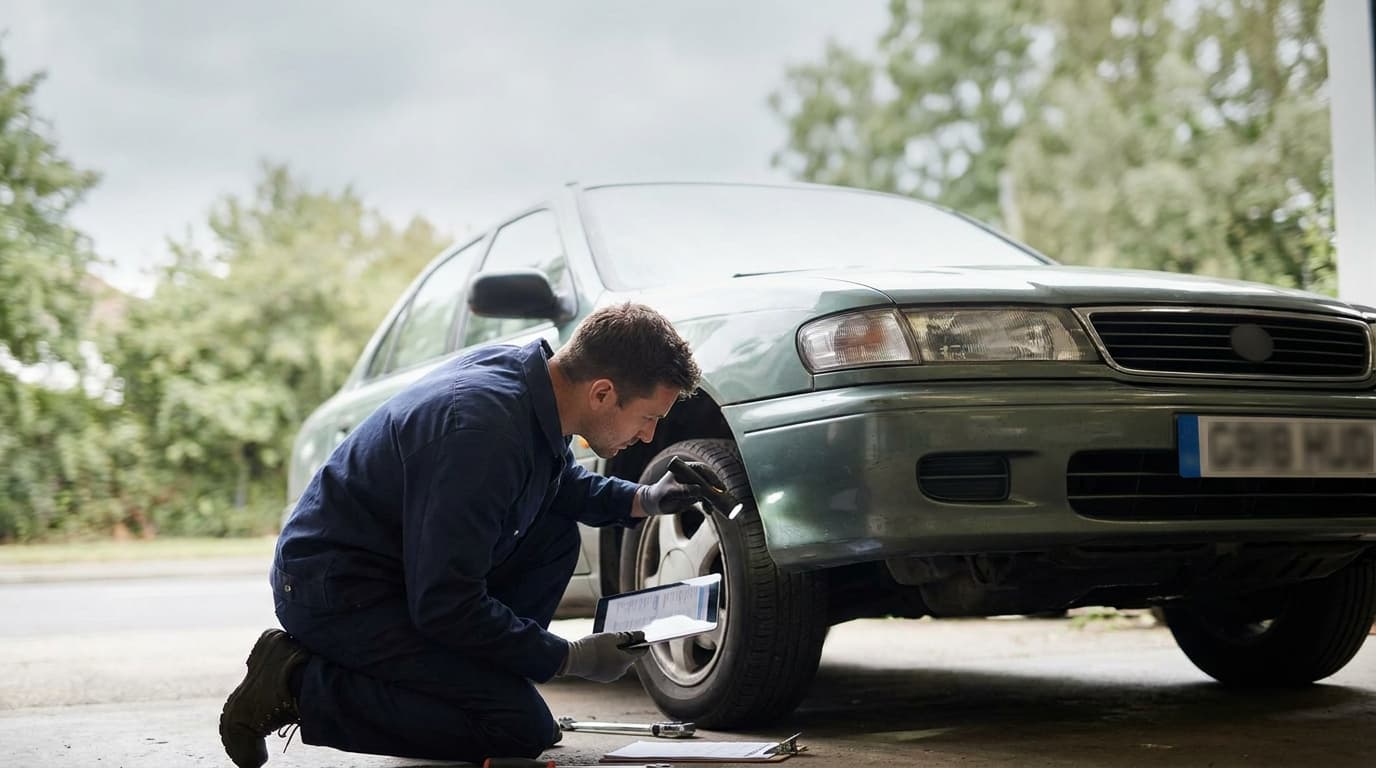
On this page
- At a glance: which check finds what
- What you need before you start
- How to check if car was in an accident: the 9 steps
- 1. Decode the VIN and confirm it matches the car
- 2. Pull the full history report and read the title section first
- 3. Scan the damage events and open the auction photos
- 4. Check the odometer chronology for a gap around the damage date
- 5. Search the seller's ZIP code for the responding agency
- 6. Request the crash report
- 7. Ask the seller for the claim paperwork, then verify it
- 8. Run the VIN through the NHTSA recall lookup
- 9. Put the car on a lift with someone who repairs collision damage
- Reading a total loss record without panicking
- Police report vehicle collision check: how to request one
- Troubleshooting
- The report is clean but the car has clearly been repainted
- I can't find the crash report online
- The seller won't give me the VIN
- The accident happened out of state
- Two reports disagree with each other
- The car has a "rebuilt" title and the seller says it was minor
- FAQ
- Can I check for accidents with just a license plate?
- Does a clean title mean the car was never in an accident?
- How long does an accident stay on a vehicle history report?
- Can I get someone else's insurance claim history?
- What does it cost to check everything?
- Is a totaled car ever worth buying?
If you want to know how to check if car was in an accident, the short answer is that you need three separate paper trails: the title record (which shows salvage and insurance total loss brands), the damage and auction record (which often includes photos of the wreck), and the police crash report from the agency that worked the scene. No single one of those catches everything. A car can have a spotless title, a clean-looking Carfax-style timeline, and still have $9,000 of body work behind the rear quarter panel because the owner paid cash and never filed a claim.
This guide walks through the checks in the order I'd actually do them, starting with the free ones and ending with the $150 inspection you only pay for once you're serious about the car.
At a glance: which check finds what
Check | What it catches | Where | Typical cost | Time |
|---|---|---|---|---|
VIN decode | Trim, engine, factory build data to compare against the car in front of you | TrulyCar homepage, NHTSA | Free | Seconds |
Title brand check (NMVTIS) | Salvage, junk, rebuilt, insurance total loss | Vehicle history report | $16.99 | Minutes |
Damage events + auction photos | Wrecked cars that went through Copart or IAAI, plus what the damage looked like | Vehicle history report | Included | Minutes |
Police crash report | Collisions with a responding officer, including ones never claimed to insurance | Local PD, sheriff, state police portal | $0 to $25 | 1 day to 3 weeks |
Insurance claim history | Repaired claims below the total loss threshold | Seller's paperwork, insurer with owner consent | Free | Varies |
Physical inspection | Repairs nobody ever reported anywhere | Independent shop or body shop | $100 to $250 | 1 to 2 hours |
What you need before you start
The full 17-character VIN, photographed rather than typed from the seller's text message. Transposed digits waste your money.
The license plate if the seller hasn't given up the VIN yet. A plate lookup gets you the VIN.
The city and state where the seller says the car has lived, plus any prior states on the title.
A flashlight and a small magnet or a paint depth gauge if you're going to look at the car yourself. A decent gauge runs $40 to $80.
Roughly $20 for records and whatever the local agency charges for a crash report.
How to check if car was in an accident: the 9 steps
1. Decode the VIN and confirm it matches the car
Start free. Punch the VIN into the decoder on the TrulyCar homepage and read back the engine, body style, plant, and model year. Then check the VIN in three physical places: the dash plate under the windshield, the driver's door jamb sticker, and the title. If the door jamb sticker is missing, wrinkled, or a different font, that door was replaced or the label was reprinted. Both are worth asking about.
2. Pull the full history report and read the title section first
The title section is where insurance total losses show up. Look for the words salvage, junk, rebuilt, reconstructed, flood, or "total loss" in any state on the list, not just the current one. A TrulyCar report pulls title and brand data from NMVTIS along with damage events, the odometer chronology, sales and usage timeline, open recalls, and market values by condition, all in one $16.99 report with no subscription attached. If the brand history jumps states in a suspicious way, read our breakdown of how salvage cars end up with clean titles.
3. Scan the damage events and open the auction photos
This is the part people skip and then regret. If a car went through a salvage auction, there are usually photos: front three-quarter, rear three-quarter, interior, dash with the odometer showing, and close-ups of the damage. Photos tell you what a one-line "damage reported" entry never will. A crushed bumper cover is not the same as a bent radiator support with the airbags deployed. Our guide to finding auction photos by VIN covers what to look for in the frames.
4. Check the odometer chronology for a gap around the damage date
Wrecked cars often sit. If the car reads 61,400 miles in March 2022 and 62,100 miles in November 2023, something happened during that stretch, and "it sat in my garage" is one explanation among several. Rollbacks also cluster around resale after a repair, because whoever fixed the car is trying to make the whole package look better.
5. Search the seller's ZIP code for the responding agency
Now you're moving to records the history report can't reach. Crash reports live with the police department, sheriff's office, or state highway patrol that worked the scene. If the report showed a damage event in Mesa, Arizona in June 2021, you're calling or searching Mesa PD and the Arizona DPS. If the report showed nothing but the car has fresh paint, start with the agency covering the seller's address.
6. Request the crash report
Most agencies now use an online records portal. Some run their own; many use third-party crash report portals where you search by name, date, report number, or in some states the VIN or plate. Fees usually land between $5 and $25. Reports typically become available five to ten business days after the collision. More on the specifics below.
7. Ask the seller for the claim paperwork, then verify it
Ask directly: "Has this car ever had an insurance claim, and do you still have the estimate?" A repair estimate from a body shop lists every operation, every part number, and whether the shop used OEM or aftermarket panels. That single PDF tells you more than any report. If the seller has it, cross-check the shop name and date against the history report timeline. If the seller is the registered owner, they can also call their insurer and request their own claim history in writing. Privacy rules keep you from pulling someone else's claim file yourself.
8. Run the VIN through the NHTSA recall lookup
Free, takes twenty seconds at nhtsa.gov/recalls. Open recalls aren't accident evidence, but an unrepaired airbag or structural recall on a car that's already been hit changes what you're buying. TrulyCar reports also list open recall campaigns alongside the manufacturer's maintenance schedule and factory warranty terms, so you can see whether coverage is still alive.
9. Put the car on a lift with someone who repairs collision damage
A general mechanic will check the brakes and the fluids. A body shop estimator will read the paint, the seams, and the bolts. Things worth $150 of their time:
Paint depth. Factory finishes usually read somewhere around 4 to 7 mils. Panels at 12 to 20 mils have been resprayed.
Bolt heads on the fenders, hood, and radiator support. Wrench marks in the factory paint mean the panel came off.
Weld seams and spot welds. Factory spot welds are evenly spaced dimples. MIG puddles and seam sealer smeared by hand are repair work.
Seat belt date codes and airbag module. Belts have manufacture dates on the tag; if the fronts are two years newer than the car, they were replaced after deployment.
Overspray in the door jambs, wheel wells, and under the trunk weatherstrip.
Panel gaps. Compare left to right, not against your memory of what looks right.

Reading a total loss record without panicking
"Was this car written off by insurance" is the question behind a lot of these searches, and the honest answer is that a total loss is a financial decision, not a verdict on the metal. An insurer totals a car when repair cost plus salvage value crosses a threshold. State rules vary widely, with some states using a percentage of pre-crash value (commonly anywhere from 50% to 100%) and others using a total loss formula. A 2016 Corolla with a $6,200 book value and $4,000 of hail dents gets totaled. So does a 2014 Fusion that got backed into hard enough to bend a quarter panel.
So a total loss vehicle check gives you a starting question, not an ending answer. What you want to know next:
What kind of damage? Hail and theft recovery are different animals from a frontal impact with airbag deployment.
Did the airbags fire? That's a $2,000 to $5,000 repair on many cars, and shortcuts here (fake modules, cut sensors) are common on cheap rebuilds.
Who rebuilt it, and does the state inspection paperwork exist?
What's it worth now? A rebuilt title typically knocks 20% to 40% off retail value, and plenty of lenders and insurers treat those cars differently.
If the answer to all of that checks out and the price reflects the brand, a rebuilt car can be a reasonable buy. If the seller is asking clean-title money for a rebuilt car, walk. That's not a negotiation, that's a tell.
Police report vehicle collision check: how to request one
A police report vehicle collision check catches the accidents that never became insurance claims. Two drivers exchange information, the officer writes it up, and then one of them pays cash for the repair to keep their premium down. Nothing hits the title, nothing hits the claim databases, but the report exists.
Here's the process:
Identify the agency by where the crash happened. City street means the municipal PD. County road means the sheriff. Interstate or state highway usually means state police or highway patrol.
Find the records or "Crash Reports" page on that agency's site. Many link out to a portal such as BuyCrash or CrashDocs, which are widely used by US agencies.
Search with what you have. Most portals want the report number, or a combination of last name, date, and location. Some let you search by plate or VIN, which is the version you want.
Pay the fee and download the PDF.
Read the diagram and the narrative, not just the checkboxes. The officer's sketch shows point of impact. The narrative tells you speed estimates, whether the car was towed, and whether it was drivable.
The "vehicle towed from scene" box is the one I look at first. A car towed away is a car that took real damage.
Troubleshooting
The report is clean but the car has clearly been repainted
That's an uninsured repair, and it happens constantly. Nothing gets reported when the owner pays the body shop directly. Your leverage here is the physical inspection and the seller's answer when you ask about the paint depth readings. Price the car accordingly, or move on if the repair looks structural.
I can't find the crash report online
Smaller departments still handle records by phone or in person, and some hold reports for 30 to 60 days while a case is open. Call the records division during business hours and give them the date, location, and plate. If you don't know the exact date, ask whether they'll search a date range for a specific plate. Some will, some won't.
The seller won't give me the VIN
Ask for a photo of the windshield VIN plate or the door jamb sticker. If they refuse but posted the car with a visible plate, run the plate lookup to get the VIN. A seller who hides the VIN on a car they're advertising publicly has usually already had the conversation you're about to have with somebody else.
The accident happened out of state
Records don't cross state lines cleanly. Check every state listed in the title history, and search that state's DMV or DOT crash records page separately. NMVTIS-sourced title data is national, which is why it catches brands that got scrubbed during an interstate title transfer.
Two reports disagree with each other
Different services pull from different feeds, and no service has every record. Treat any damage entry from any source as real until proven otherwise, and let the physical inspection break the tie. Big-name single reports run about $45 at the going rate, so a second opinion isn't cheap unless you shop around; a TrulyCar 3-pack at $29.99 is one way to cover several cars while you're still shopping.
The car has a "rebuilt" title and the seller says it was minor
Then the paperwork exists. State rebuilt inspections generate documents. Ask for the inspection certificate, the receipts for parts, and photos from before the repair. If none of it exists, you're buying somebody's story.
FAQ
Can I check for accidents with just a license plate?
You can start with one. A plate lookup returns the VIN, and every meaningful record search runs on the VIN. TrulyCar's homepage plate lookup and VIN decode are both free; the damage, title, and odometer records come with the full report.
Does a clean title mean the car was never in an accident?
No. A clean title means no insurer declared it a total loss and no state applied a brand. Cars with $8,000 in repaired collision damage carry clean titles every day. That's why the inspection step matters even when the paperwork looks fine.
How long does an accident stay on a vehicle history report?
Title brands are permanent once applied and follow the VIN. Reported damage events and auction records generally stay in the history indefinitely too. What fades is the informal stuff: uninsured repairs never appear at all.
Can I get someone else's insurance claim history?
Not directly. Claim files are tied to the policyholder. The current owner can request their own loss history from their insurer and share it with you, and that's the cleanest way to get it. Otherwise you rely on title records, damage events, and the crash report.
What does it cost to check everything?
Roughly $17 for the history report, $0 to $25 for a crash report, and $100 to $250 for a pre-purchase inspection at a shop that handles collision work. Under $300 total on a car you're about to spend $15,000 on. The inspection is the part worth paying for twice if the first shop is vague.
Is a totaled car ever worth buying?
Sometimes, at the right price. Hail cars and theft recoveries with a rebuilt title can be genuinely good value. Structural repairs with deployed airbags and no documentation are a different bet, and you'll feel it again at resale, at the insurance quote, and possibly at the loan application.
Chris Hans
Vehicle History Expert
Chris Hans writes TrulyCar's practical guides for used-car buyers, built on the same NMVTIS title data and NHTSA records that power our reports.
Buying a used car? Check its history first.
Run a free VIN checkKeep reading
How to Check if Car Was in an Accident (Police + Insurance)
How to check if car was in an accident using police crash reports, insurance total loss records, NMVTIS title data, and salvage auction photo archives.
Sep 13, 20269 min read
TrulyCar vs CARFAX: A CARFAX Alternative at $16.99
TrulyCar vs CARFAX: how a $16.99 CARFAX alternative compares on price, title data, damage photos, recalls and market values before you buy.
Sep 3, 20267 min read
Best Vehicle History Report Site: TrulyCar Reviewed
An honest review of the best vehicle history report site for one-off buyers: what TrulyCar's $16.99 report covers, where it falls short, and how it compares.
Aug 27, 20268 min read