What Is a Salvage Title? How to Spot a Rebuilt Car
 Chris HansVehicle History ExpertAugust 31, 20269 min read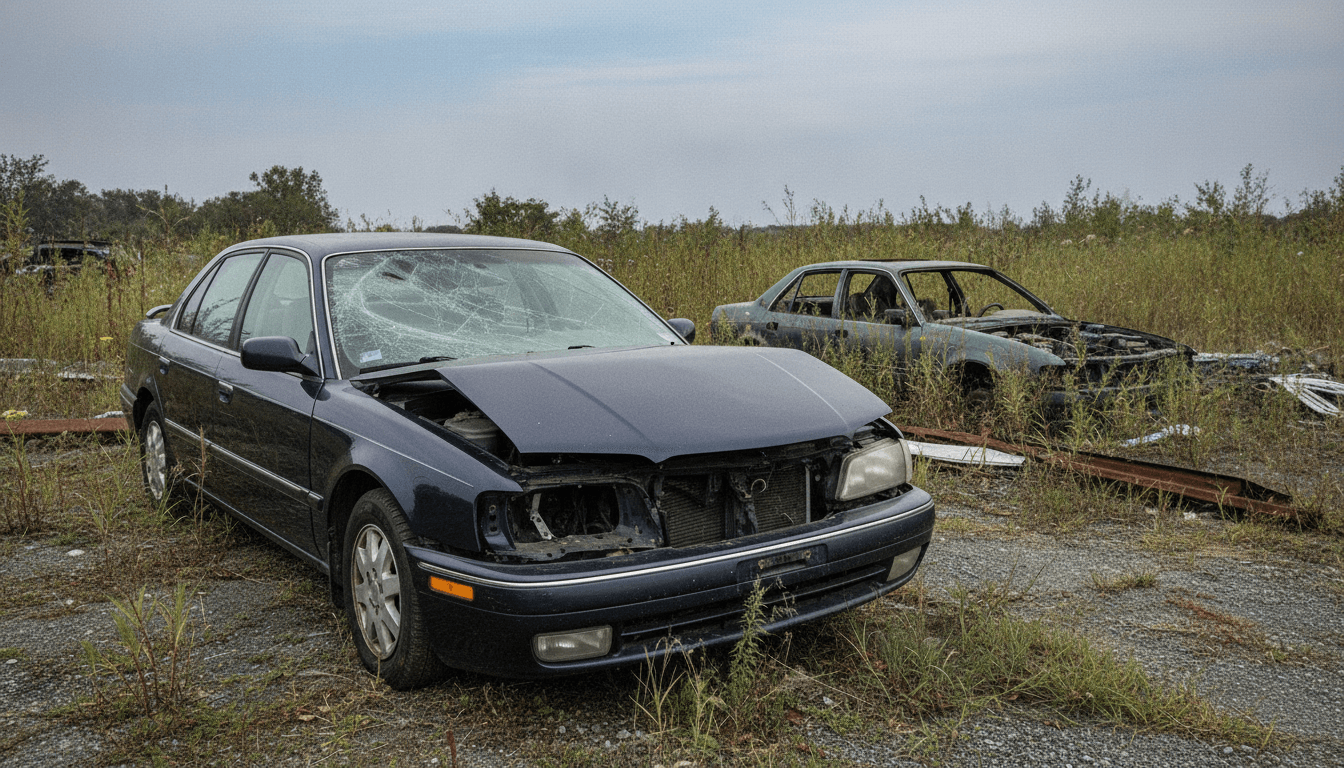
On this page
- What is a salvage title, and how brands differ
- What you need before you start
- How to check if a car is rebuilt: step by step
- How to tell if a car was flooded
- Troubleshooting confusing results
- The title looks clean but the report shows a salvage auction sale
- The report lists a total loss but no brand at all
- The seller has only a bill of sale, no title
- A damage event has no photos attached
- Two states show titles issued the same month
- What is a salvage title worth: money and insurance
- FAQ
- What is a salvage title in plain English?
- What's the real difference in salvage title vs rebuilt title?
- Can a junk title car ever be driven again?
- Does a rebuilt car pass a safety inspection and get insured?
- How much does it cost to check whether a car has a branded title?
- What if the car has a clean title but I still suspect flood damage?
A salvage title is a legal brand a state puts on a vehicle after an insurer declares it a total loss, meaning the cost to repair it passed the insurer's threshold (often 70% to 80% of the car's pre-loss value, depending on the state). Once that car is repaired and passes a state inspection, the brand usually changes to "rebuilt" or "reconstructed," which is legal to register and drive. A junk title, sometimes called a certificate of destruction or a non-repairable certificate, means the vehicle is supposed to be dismantled and never titled for road use again.
The tricky part isn't the definitions. It's figuring out which of those three sits in a car's past when the seller hands you a clean-looking title from a state you've never dealt with. This guide walks through the exact checks, in order.
- What is a salvage title, and how brands differ
- What you need before you start
- How to check if a car is rebuilt: step by step
- How to tell if a car was flooded
- Troubleshooting confusing results
- What is a salvage title worth: money and insurance
- FAQ
What is a salvage title, and how brands differ
Every state writes its own rules and its own vocabulary, so the same car can carry different words on paper depending on where it was titled. Here's the practical version.
| Title type | What it means | Street legal? | Typical price effect |
|---|---|---|---|
| Clean | No total-loss or destruction brand on record | Yes | Baseline market value |
| Salvage | Insurer paid a total loss; car has not passed a rebuild inspection | No, not until rebuilt and inspected | Sells as a repair project, often 40% to 60% below clean retail |
| Rebuilt / Reconstructed / Prior Salvage | Salvage vehicle repaired and inspected by the state | Yes | Roughly 20% to 40% under a comparable clean-title car |
| Junk / Certificate of Destruction / Non-Repairable | Vehicle designated for dismantling or parts only | No, and in most states it can never be retitled | Parts value only |
| Flood, Hail, Lemon, Fire | Cause-specific brands some states apply on top of, or instead of, salvage | Varies by state | Flood and fire brands hit hardest |
Two things trip up buyers constantly. First, "salvage title vs rebuilt title" is a sequence, not a choice: rebuilt almost always starts as salvage. Second, not every totaled car ends up branded. An owner who declines the insurance payout, or a car totaled by a small regional insurer in a state with a high threshold, can keep a clean title with real structural damage behind it. That's why paper alone is never enough.
What you need before you start
- The 17-character VIN. Read it off the driver-side dash plate and the door jamb sticker, not just the listing. If you only have a plate number, a license plate lookup will get you the VIN.
- Photos of the actual title, front and back. Ask for these before you drive anywhere. A seller who won't send them is telling you something.
- A flashlight and a magnet. The flashlight is for wheel wells, trunk channels, and under the dash. The magnet finds thick body filler where metal should be.
- About $17 for a history report. TrulyCar's Complete Vehicle History Report runs $16.99, with a 3-pack at $29.99 if you're cross-shopping several cars. The big legacy report brands generally land near the mid-$40s for a single pull, which is fine if you're only checking one vehicle.
How to check if a car is rebuilt: step by step
Decode the VIN and confirm the basics. Enter the VIN in the search box on the TrulyCar homepage or in NHTSA's decoder at nhtsa.gov. Check that the year, engine, trim, and assembly plant match what the seller claims. A 2019 Accord VIN that decodes as a base LX while the ad says Sport is a small lie that predicts bigger ones.
Read every field on the title photo. Look for a box labeled "Brands," "Title Brand," "Remarks," or "Legend." States print codes there: SALVAGE, REBUILT, RECONSTRUCTED, PRIOR SALVAGE, FLOOD, JUNK, NON-REPAIRABLE. Also check the issue date and the "Previous Title" or "Prior State" line. A title issued three months ago in a different state than where the car sits deserves a second look.
Run the VIN through NMVTIS. The National Motor Vehicle Title Information System is the federal database states report titles to. Consumer access runs through approved providers listed at vehiclehistory.gov. NMVTIS is where junk and salvage reports from insurers and auto recyclers land, and it's the single most useful source for brand history because reporting is federally required.
Pull a full history report and read the title section first. A TrulyCar report covers title and brand checks, damage events with archived auction photos, odometer chronology with rollback detection, the sales and usage timeline, and open recalls. Start your VIN at the VIN search on the homepage and go straight to the brand list, then the damage timeline. Note every state that has ever issued a title and the date order.
Compare the auction photos to the car in front of you. This is the step most buyers skip, and it's the most persuasive. If the archive shows a 2018 Rogue with a caved-in right quarter panel and deployed side curtain airbags, you now know exactly where to look for repair work. Check the seam sealer in the trunk gutter, the spot welds on the rear inner panel, and whether the airbag module was replaced or just reset.
Check the state's title status lookup. Many DMVs offer a public "title status" or "vehicle record" search by VIN. Search for your state's name plus "DMV title status check." Some states also publish rebuilt-inspection records, which tell you whether a rebuilt brand came with a real inspection or a rubber stamp.
Inspect for structural repair by hand. Sight down each body side for wavy reflections. Check panel gaps at the hood, doors, and trunk against the opposite side. Look for factory VIN stickers on the fenders, doors, hood, and hatch: missing or mismatched stickers usually mean replaced panels. Peel back the trunk trim and look at the frame rails for crush wrinkles, kinks, or fresh undercoating sprayed over rust. Overspray on rubber seals, bolt heads with the paint cracked off, and mismatched paint texture between adjacent panels all point the same direction.
Verify the odometer against the timeline. Rebuilt cars change hands a lot, and each transfer is a chance for mileage to "correct" itself. Read the odometer chronology in the report and look for a reading that drops, or a five-year gap with only 3,000 miles added. Rollback and a repaired total loss often travel together.
Check open recalls before you commit. Enter the VIN at nhtsa.gov/recalls. A branded car can be turned away by dealers for warranty work in some situations, but safety recall repairs are performed free regardless of title status, so an open airbag or fuel pump recall is worth clearing before delivery.
Get an insurance quote and, if you're financing, a lender answer, in writing. Call your carrier with the VIN and say the car is branded rebuilt. Some carriers will write liability only. Many banks and credit unions won't finance a branded title at all, or will cap the loan-to-value well under what you'd expect. Better to learn that before you hand over a deposit.
How to tell if a car was flooded
Flood cars are the hardest branded vehicles to detect after a good cleaning, and they keep coming: Harvey in 2017, Ida in 2021, and Ian in 2022 each pushed tens of thousands of soaked vehicles into the national market, often retitled far from the storm. Here's how to tell if a car was flooded when the paperwork says nothing.
- Smell it with the windows closed and the fan off. Musty, sour, or aggressively perfumed. Heavy air freshener in a used car is a signal, not a courtesy.
- Pull the spare tire. The well under it collects silt and holds rust. Fine dried mud in the corners, or a rust ring on the jack, is hard to fake and hard to clean.
- Feel under the carpet at the lowest point. Damp padding, water staining on the sound deadener, or brand-new carpet in a nine-year-old car with worn pedals.
- Look at unpainted metal you can't easily reach. Seat mounting brackets, seat rails, seat belt bolts, the steering column bracket, the hood latch, and the bolt heads under the dash. Surface rust there on a car from a dry climate doesn't add up.
- Check electrical connectors. Green or white powdery corrosion on plugs under the seats or behind the kick panels means water sat inside the cabin.
- Watch the electronics. Cycle every window, the sunroof, both mirrors, the radio, the seat motors, the HVAC blower on all speeds. Flood damage shows up as intermittent gremlins months later, and it never gets cheaper.
- Look for water lines. A faint horizontal stain on the door trim, the headliner edge, or inside the headlight housings. Fogged or hazy lenses on both sides at the same height are suspicious.
Troubleshooting confusing results
The title looks clean but the report shows a salvage auction sale
That combination usually means the brand got dropped somewhere in a multi-state title chain. It's called title washing, and it's more common than most buyers expect. Walk through the state sequence and dates in the report; a car titled in Florida, then Kentucky, then Ohio within eight months is following a pattern. Our breakdown of how title washing works covers the state-by-state gaps.
The report lists a total loss but no brand at all
Possible and not always sinister. Some owners keep the vehicle after an insurance payout (an "owner retained" total loss), and a handful of states don't brand older vehicles or low-value ones. Treat it as a confirmed damage event and inspect accordingly. Ask the seller directly what happened and compare the answer to the auction photos.
The seller has only a bill of sale, no title
Stop. In most states you cannot register a vehicle without a title in the seller's name, and "the title is coming" is the standard cover story for a car with a junk certificate or an unresolved lien. If the VIN turns up a non-repairable or certificate of destruction record, no amount of paperwork will make it road legal.
A damage event has no photos attached
Photo archives are strongest for vehicles that moved through major salvage auctions, which mostly means insurance total losses from the last decade or so. Older events, private repairs, and claims settled without an auction sale may show as a record with no images. Use the event date, mileage, and reported damage type to guide a physical inspection instead.
Two states show titles issued the same month
Usually a dealer or transporter moving the car, sometimes a duplicate title request. Note the mileage on each entry. If the readings disagree by more than a few hundred miles, you're looking at either sloppy data entry or an odometer problem, and the report's rollback flag should tell you which.
What is a salvage title worth: money and insurance
A rebuilt car can be a legitimate value play. I've seen well-repaired rebuilt Camrys and F-150s sell for $5,000 to $9,000 under clean-title comparables, and if you plan to keep the truck for a decade, that discount is real money. The trade-offs are consistent, though:
- Resale is narrower. Franchise dealers rarely take branded cars in trade at retail money. Your buyer pool shrinks to private parties and wholesale.
- Physical damage coverage gets harder. Liability is generally available. Collision and comprehensive depend on the carrier, and payouts are calculated off the branded value.
- Financing may not exist. Plan for cash or a personal loan.
- Repair quality varies wildly. Two rebuilt 2020 Civics with identical brands can differ by $6,000 in actual condition. One got new OEM structural parts and a proper frame pull; the other got filler and a paint booth.
If you're buying, price the discount against a real repair estimate, not against hope. Pay a body shop $150 to put it on a lift and measure. If you're a small dealer, disclose the brand in writing on every listing and keep the auction photos in the deal jacket. It costs you nothing and it kills the "I didn't know" complaint later.
For a side-by-side on what different report providers surface, see our TrulyCar vs CARFAX comparison.
FAQ
What is a salvage title in plain English?
It's a state-issued brand telling you an insurance company decided the car wasn't worth repairing. The vehicle can't be registered for road use while it carries that brand. After repairs and a state inspection, the brand typically converts to rebuilt or reconstructed, which is registrable.
What's the real difference in salvage title vs rebuilt title?
Timing and legality. Salvage means totaled and not yet certified for the road. Rebuilt means the same car came back through a state inspection and can be registered. Both permanently disclose that the vehicle was once a total loss, and neither ever reverts to clean.
Can a junk title car ever be driven again?
In most states, no. A junk title, certificate of destruction, or non-repairable certificate is a one-way door: the VIN is flagged for dismantling and cannot be retitled for street use. A few states have narrow exceptions, but if a seller claims one applies, get it confirmed by the DMV in writing before any money changes hands.
Does a rebuilt car pass a safety inspection and get insured?
It can pass state safety inspection if the repairs were done correctly. Insurance is carrier-specific: liability is usually straightforward, while collision and comprehensive coverage may be limited or declined. Call your own agent with the VIN before you buy rather than assuming.
How much does it cost to check whether a car has a branded title?
A single Complete Vehicle History Report from TrulyCar is $16.99, and it includes title and brand checks, damage records with auction photos, odometer history, recall status, the factory maintenance schedule, and market values by condition. NMVTIS-based brand checks through approved providers cost a few dollars but don't include damage photos or mileage history.
What if the car has a clean title but I still suspect flood damage?
Trust the metal over the paperwork. Check the spare tire well, the seat bracket bolts, and the connectors under the carpet, then compare the car's title states against major storm regions and dates in the timeline. If two or three flood indicators line up, pass on the car. Flood electrical faults surface months after the sale.
Chris Hans
Vehicle History Expert
Chris Hans writes TrulyCar's practical guides for used-car buyers, built on the same NMVTIS title data and NHTSA records that power our reports.
Buying a used car? Check its history first.
Run a free VIN checkKeep reading
How to Find Car Auction Photos by VIN (Copart & IAAI)
Find car auction photos by VIN using Copart and IAAI search, archive sites, and history reports. Step-by-step, plus fixes when the lot is gone.
Sep 13, 20268 min read
Can You Find a License Plate Number From a VIN?
Usually not, and the reason is federal privacy law. Here is who can legitimately pull a plate from a VIN, what a VIN does reveal, and what to do for tolls, tickets, and hit-and-runs.
Sep 9, 20267 min read

Cheap VIN Check Traps: TrulyCar vs EpicVIN vs Bumper
A cheap VIN check can cost more than a $45 report if it auto-renews. Compare TrulyCar, EpicVIN and Bumper on price, data and cancellation.
Sep 3, 20267 min read