VIN Cloning: How to Spot a Cloned Car Before You Buy
 Chris HansVehicle History ExpertOctober 2, 20269 min read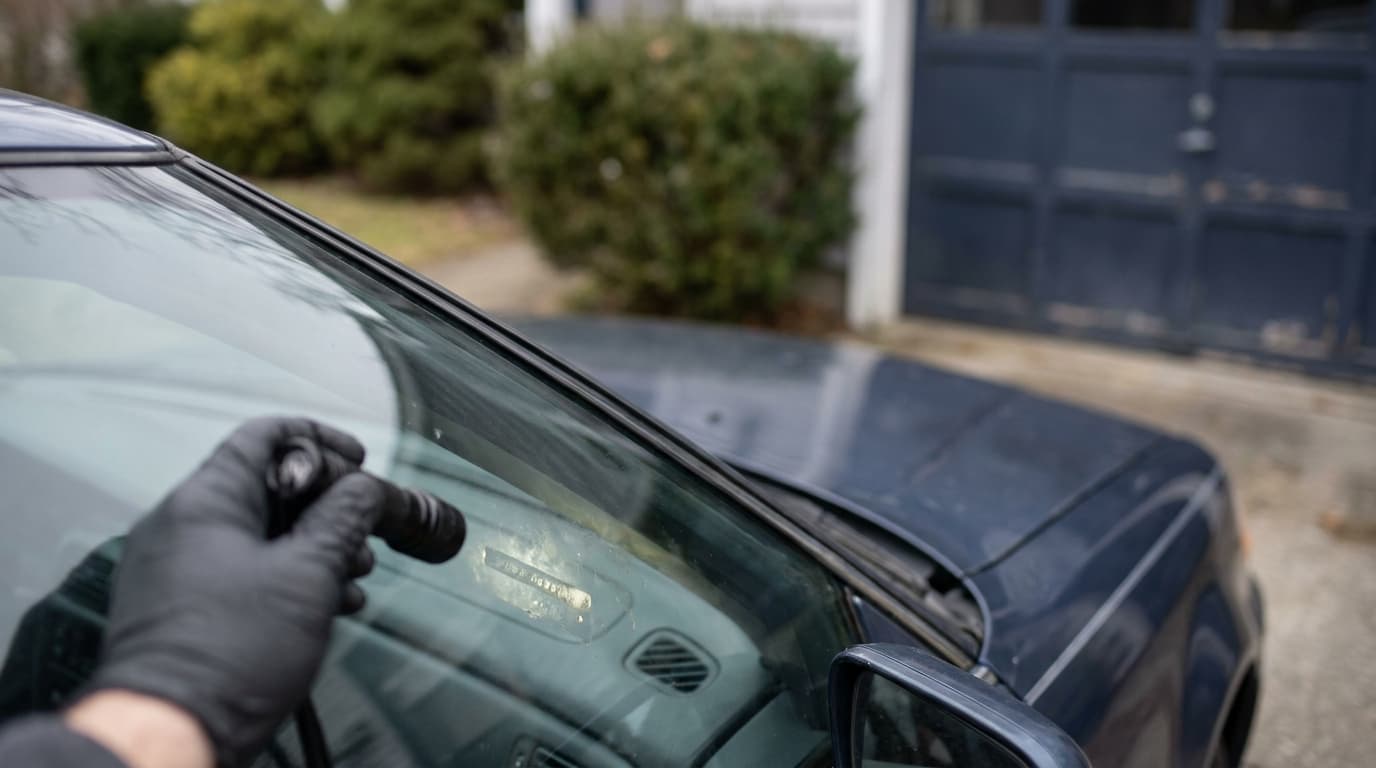
On this page
- At a glance
- What VIN Cloning Is, in Plain Terms
- What You Need Before You Start
- How to Tell if a Car Is Cloned: 10 Steps
- VIN Cloning Red Flags That Should End the Deal
- Troubleshooting
- The dash VIN and the door label don't match
- The history report comes back with almost no records
- The seller refuses a scan or a lift inspection
- Everything checks out but something feels off
- You found a cloned car. Now what?
- What to Do if You Already Bought One
- FAQ
- Can a vehicle history report detect VIN cloning on its own?
- How do I check a VIN for cloning for free?
- Is VIN cloning common?
- Do cloned cars only show up in private sales?
- Why does the price look normal instead of too good to be true?
- What's the single fastest check I can do?
VIN cloning is identity theft for cars. A thief copies the VIN from a legitimately titled vehicle, puts that number on a stolen or washed-title car of the same year, make, and color, and then sells it with paperwork that looks clean at the DMV counter. You catch it by comparing the car's physical VIN markings against each other, decoding the number and checking whether the result actually describes the car in front of you, and reading the history timeline for states and mileage that don't match the metal.
Most of this takes about 20 minutes and costs under $20. The alternative is a police tow truck showing up months later, because when a cloned car is identified, law enforcement returns it to the insurer or the rightful owner. The buyer usually keeps nothing but a receipt.
- What VIN Cloning Is, in Plain Terms
- What You Need Before You Start
- How to Tell if a Car Is Cloned: 10 Steps
- VIN Cloning Red Flags That Should End the Deal
- Troubleshooting
- What to Do if You Already Bought One
- FAQ
At a glance
| What you're checking | Where to look | What a clone often looks like | Time or cost |
|---|---|---|---|
| Public VIN plate | Driver side dash, visible through windshield | Loose or wrong rivets, uneven stamping, scratched dash pad, adhesive residue | 2 minutes |
| Safety certification label | Driver door jamb or door edge | Peeling, reprinted, wrong font, build date that conflicts with the model year | 2 minutes |
| Decoded specs vs. the real car | Free VIN decoder | Decode says 2.0L four-cylinder, car has a V6; decode says sedan, car is a coupe | 5 minutes, free |
| History timeline | Vehicle history report | Nine years of Arizona registration on a car with Ohio salt rot | $16.99 |
| Module VIN | OBD-II scan at a shop | ECU, cluster, or airbag module reports a different VIN | $50 to $150 |
| Theft record | NICB VINCheck | VIN flagged as a reported theft or unrecovered loss | Free |
What VIN Cloning Is, in Plain Terms
Every car carries a 17-character VIN in several places: a plate riveted to the dash, a sticker in the driver door jamb, stampings on the frame or firewall, and usually small labels on the fenders, doors, hood, and trunk lid. The VIN is also written into several electronic modules. State titles key off that number.
A cloner steals a car, then goes looking for a legally registered twin. The donor can be a car parked in a mall lot in another state, a vehicle listed on a classifieds site with the VIN in the photos, or a car the cloner once rented. Once they have a donor VIN, they replace the dash plate and door label, forge a title (or get a real title from a state with loose paperwork rules), and list the car at a price that feels like a deal but isn't absurd.
Two things make VIN cloning hard on buyers. The history you pull belongs to the donor car, and the donor car is fine, so the report shows clean title, sane mileage, and ordinary service. And the title you receive may be a genuine state-issued document, because the fraud happened upstream at registration.
A related variation: a cloner takes the VIN from a wrecked, crushed, or exported vehicle and applies it to a stolen one. There's also the more mundane "salvage switch," where a buyer purchases a totaled car at auction mostly for its identity and then hangs that identity on a stolen car of the same spec. Auction photo archives are useful here, since a car that was photographed with a caved-in roof in 2022 should not be sitting in front of you with straight sheet metal. We covered pulling those images in how to find car auction photos by VIN.
What You Need Before You Start
- A flashlight, ideally with a narrow beam for reading stampings under the hood.
- Your phone's camera. Photograph every VIN location rather than trying to read them by eye.
- The seller's title in hand, or a clear photo of the front and back.
- A free VIN decode and a full history report. TrulyCar's decoder and plate lookup are free on the homepage, and the full report runs $16.99 with no subscription.
- Access to an OBD-II scanner, or a local shop willing to read module data for a pre-purchase fee.
- About 30 minutes with the car in daylight. Night viewings are where cloned cars get sold.
How to Tell if a Car Is Cloned: 10 Steps
Collect the VIN from at least three physical locations. Dash plate through the windshield, driver door jamb label, and one stamping (engine bay firewall, strut tower, or frame rail depending on the make). Photograph each. Then zoom in and compare character by character. Cloners frequently get the dash and door right and forget the stamping, because grinding and restamping steel takes equipment.
Compare the title's VIN to the car's VIN. Read it backwards, one character at a time. A single transposed digit is either a clerical error or a deliberate one, and you can't tell which from the couch.
Decode the VIN and check the output against the actual car. Enter the number in the VIN field on the TrulyCar homepage, or use the government decoder at vpic.nhtsa.dot.gov/decoder and hit Decode VIN. Then walk the car. Does the engine displacement match? Body style? Number of doors? Drive type? Assembly plant? A 2019 Silverado VIN that decodes to a 4.3L V6 regular cab, sitting on a crew cab with a 5.3L badge, is the whole investigation right there. Our walkthrough of the NHTSA decoder covers what it does and doesn't tell you.
Run the license plate. Enter the plate and state in the plate lookup on the homepage and see which vehicle comes back. If the plate maps to a different year, body, or color than the car wearing it, stop. Plates get swapped onto cloned cars more often than VIN plates do, because it's a five-minute job with a screwdriver.
Pull the full history and read it geographically. Open the sales and usage timeline and note every state and city. Then look at the car. Rust on the rear wheel arches and a crusty exhaust hanger do not belong on a vehicle that supposedly lived its whole life in Phoenix. Inspection stickers, dealer plate frames, toll transponder mounting residue, and the radio's saved FM presets all leave regional fingerprints. A TrulyCar report covers title and brand records, damage events with auction photos, the odometer chronology, and the ownership timeline, so you can check the VIN against what you're looking at.
Compare the odometer chronology to the car's wear. A donor VIN with 142,000 recorded miles paired with a car showing 61,000 on the cluster is a mismatch you can see. So is the reverse: a low-mileage history on a car with a polished-smooth brake pedal pad and a worn driver's seat bolster. Our odometer rollback checklist goes deeper on the physical tells.
Inspect the dash VIN plate itself. On most makes it sits under the windshield, held by factory rosette rivets with a specific pattern. Look for Phillips screws, pop rivets, glue, a plate that sits crooked, scratches in the dash pad around it, or a windshield with fresh urethane when the rest of the car is untouched. Replacing a dash VIN plate usually means pulling or cutting the glass.
Read the door jamb certification label. This federal label lists the manufacture date (month and year), GVWR, tire sizes, and the VIN. Check that the build date makes sense for the model year, that the label isn't peeling at a corner, and that the print quality matches other factory labels on the car. Then find the smaller parts labels on the fenders, hood, and trunk lid. Many manufacturers put partial VINs or production barcodes there. Missing labels on half the panels suggests either a heavy collision repair or a car built out of two.
Have the electronic modules scanned. Plug in an OBD-II scanner, or pay a shop for a pre-purchase inspection and ask specifically for the VIN stored in the engine control module, instrument cluster, and restraint module. On many 2008-and-newer vehicles, those modules hold the factory-programmed VIN. Cloners who change plates and labels rarely reflash every module. A mismatch here is close to conclusive.
Check the theft record and open recalls. Run the VIN through NICB's free VINCheck for reported theft and salvage entries. Then enter it at nhtsa.gov/recalls. If the VIN shows an open recall that physically can't be open (the part is clearly the updated one), or shows none when the car visibly has an unrepaired recall condition, you have another thread to pull. Neither check proves cloning on its own. Both are free.
VIN Cloning Red Flags That Should End the Deal
- Seller won't meet at their home or a dealership and insists on a parking lot or storage unit.
- Name on the title doesn't match the seller's ID, and the explanation involves a cousin, a friend, or an estate.
- Title was issued in the last 60 days in a state the car has no other connection to.
- Cash only, and the seller resists a cashier's check or a bank meeting.
- Price sits 25 to 40 percent under comparable listings with no mechanical reason.
- Seller declines a pre-purchase inspection or balks at you photographing the VIN.
- Keys look wrong: a single aftermarket blank with no fob, or a fob that doesn't match the brand.
- Ignition lock cylinder, door lock, or steering column shows pry marks or fresh replacement.
Any one of these is survivable. Three together means walk away, and you don't owe anyone an explanation.
Troubleshooting
The dash VIN and the door label don't match
Rare but not always fraud. Door panels get replaced after collisions, and some body shops put the wrong label back or none at all. Resolve it with the stampings and the module VINs. If the stamped firewall or frame VIN agrees with the dash, and the door is the odd one out, you're probably looking at repair sloppiness. If the dash disagrees with the stampings, treat it as cloning until proven otherwise.
The history report comes back with almost no records
Thin histories happen on cars that stayed in one state with one owner and never went through auction. That's legitimate. What's not legitimate is a thin history on a car whose title shows three owners in two states. Mismatch between the paper trail the seller describes and the records that exist is the signal, not record volume alone. If you're weighing sources, our report comparison explains where different services pull from.
The seller refuses a scan or a lift inspection
That's your answer. A seller with a clean car has no reason to block a $100 inspection that makes the sale easier. If they claim their mechanic already did one, ask for the shop's name and phone number and call it.
Everything checks out but something feels off
Ask for the prior registration card, the old insurance card, or a service invoice with the VIN on it. Legitimate owners have paper. Then ask the seller a few specifics about the car's history: which shop did the timing belt, where they bought it, what the last repair cost. Cloners sell cars they've owned for three weeks and the details fall apart fast.
You found a cloned car. Now what?
Don't confront the seller and don't hand over money as a "deposit" while you think. Leave, then call the police non-emergency line and the state DMV's fraud or investigations unit with the VIN, plate, listing URL, and your photos. Altering or removing a VIN is a federal crime under 18 U.S.C. 511, and these cases are usually worked by auto theft task forces that want the tip.
What to Do if You Already Bought One
Stop driving the car. Gather the bill of sale, the title, the seller's contact information, any texts or listing screenshots, and your payment record. Report it to local police and ask for a report number, then notify your insurer and the lender if you financed. Insurance treatment varies by policy and state, so ask directly whether you have coverage for a vehicle that turns out to be stolen property.
Be realistic about recovery. When a cloned car is confirmed stolen, the vehicle goes back to the rightful owner or the insurer that paid the original claim. You become a creditor chasing a seller who may have used a fake name. Civil recovery is possible if the seller is identifiable, which is one more reason to pay by traceable method and photograph the seller's driver's license before money changes hands.
FAQ
Can a vehicle history report detect VIN cloning on its own?
Not directly. The report describes the donor VIN, and the donor car is usually legitimate, so the records look fine. What the report gives you is a factual baseline: the states the car should have lived in, the mileage it should show, the damage it should carry, and the trim it should be. Cloning shows up as the gap between that baseline and the car in your driveway.
How do I check a VIN for cloning for free?
Decode the VIN on TrulyCar's homepage or at NHTSA's decoder and compare the output to the physical car, run NICB VINCheck for theft and salvage flags, and check NHTSA for open recalls. Those three cost nothing. The paid report matters when you need the registration timeline, the odometer chronology, and auction photos to compare against the sheet metal.
Is VIN cloning common?
Nobody can give you a clean number, because a successfully cloned car is recorded in state systems as the legitimate vehicle. It gets counted as theft, not as cloning, and only surfaces when two cars with the same VIN show up in the same system. Treat it as a low-probability, high-cost risk: unlikely on any given car, ruinous if it's yours.
Do cloned cars only show up in private sales?
No. Small independent dealers buy at auction and from wholesalers, and a well-documented clone can pass through several hands before anyone notices. Buying from a licensed dealer gives you a business to sue and a bond to claim against, which is real protection, but it isn't a guarantee the VIN is honest.
Why does the price look normal instead of too good to be true?
Because cloners learned. A 2018 Accord listed at $4,000 gets ignored or reported. The same car at $16,900 against a $19,500 market gets calls. Price alone is a weak signal. The physical VIN checks are strong ones.
What's the single fastest check I can do?
Decode the VIN and walk the car with the spec sheet on your phone. Engine, body style, drive type, trim, and assembly plant take four minutes to verify, cost nothing, and catch the lazy half of cloning attempts before you've spent a dollar.
Chris Hans
Vehicle History Expert
Chris Hans writes TrulyCar's practical guides for used-car buyers, built on the same NMVTIS title data and NHTSA records that power our reports.
Buying a used car? Check its history first.
Run a free VIN checkKeep reading
How to Spot a Flood Damaged Car From Out of State
Learn how to spot a flood damaged car shipped across state lines: title brands, NMVTIS flood checks, auction photos, and the 9 physical signs sellers miss.
Sep 3, 20268 min read
How to Spot Odometer Rollback: A 9-Step Check
Learn how to spot odometer rollback with a 9-step inspection: mileage chronology, title brands, wear patterns, and digital odometer fraud red flags.
Aug 31, 20269 min read
How Title Washing Works and How to Spot a Washed Title
Title washing moves salvage and flood cars through states until the paperwork looks clean. Here's a step-by-step check before you hand over money.
Aug 26, 20269 min read